Remind: Early detection for a healthier cognitive future
Many people fear the moment they or someone close to them starts ‘slipping’. A name that won’t come, a forgotten appointment, small moments of confusion. For millions, these everyday lapses raise a worrying question: is this the beginning? Remind is building a platform to give people clarity much earlier than current systems, and in doing so, lighten the strain on healthcare and families.
Remind originated inside the venture studio of insurance company Nationale Nederlanden, focused on developing startups around the challenges of an ageing population.
One in five people will develop dementia, and every diagnosis affects an entire circle of relatives. Co-founders Job van der Heijden (CTO) and Willem Schüngel (CEO) noticed a growing gap: in the years before someone enters a care facility, people with early signs of dementia often depend heavily on partners and children. “They’re the ones who deal with the day-to-day realities long before there’s a diagnosis”, says Willem.
At the same time, many people worry about their own risk. “People often ask themselves: am I next? And that fear grows when they’ve seen what dementia can do to a loved one. I started digging into this issue, and it simply wouldn’t let go of me”, Willem says.
With Jobs’ experience in medical informatics and digital hospital systems and Willems entrepreneurial skills, they decided to independently build a product that could help people earlier, at home, before symptoms escalate. Nationale Nederlanden remains co-founder and early funder.
Understanding dementia earlier, from home
Within our care system, dementia is often diagnosed fairly late. People can struggle with symptoms for years before reaching a memory clinic. And 30% of referred patients turn out not to have dementia at all — their symptoms stem from things like stress, menopause or depression, adding unnecessary pressure on hospitals.
Remind’s solution
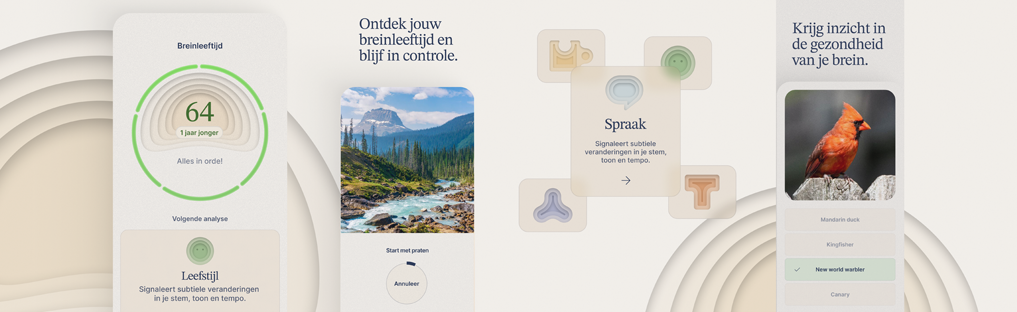
At the same time, technological innovations focus on earlier detection. New cognitive, behavioural and speech-based tests are emerging, measuring one piece of the puzzle. Remind combines multiple validated technologies into one platform and tracks changes over time.
The result is a multimodal user profile based on cognitive questionnaires, memory tests, fine-motor assessments, and short speech recordings, to name a few. By monitoring subtle changes in several domains, Remind aims to detect early signals of dementia or Alzheimer’s disease sooner.
The platform translates test results into personalised recommendations. By identifying individual risk areas, the system can highlight where lifestyle or behavioural changes are most impactful, and track progress over time.
The promise: clarity, prevention and control
Early detection has many benefits. For healthcare in general, it reduces pressure by improving the quality of referrals. When mild symptoms can be assessed at home, only people with clear indications need clinical testing.
For patients, earlier insight means earlier action. “If you start lifestyle interventions early, the risk of developing dementia can be reduced significantly. Up to 45 percent, according to research. Furthermore, people want to stay in control. They want to understand what’s happening so they can decide for themselves how they want to organise the later phase of their life.”
Science, validation and partnerships
Remind uses validated components developed by Dutch academic institutions. To further strengthen the scientific basis, Remind will run a pilot with Hersenonderzoek.nl, part of the Alzheimer Centre at Amsterdam UMC. Participants already enrolled in research programmes will be onboarded onto the platform, helping Remind gather the volume and diversity of data needed for future development.
Validation is the company’s biggest milestone: first proving the accuracy of the model, then pursuing the licences required to support clinical diagnosis. That process typically takes several years. Until then, Remind focuses on early signalling rather than medical confirmation.
A model designed to scale responsibly
To build evidence, Remind will first launch through a subscription model. This excludes some groups initially, but it is the only feasible route to collect real-world data at scale. The aim is clear: within two to three years, start formal conversations with insurers about reimbursement for all patients.
Alongside the consumer launch, Remind is preparing a B2B strategy for memory clinics, pharmaceutical trials and healthcare providers. International expansion will follow, requiring retraining algorithms to capture contextual nuances.
The value of BANN
Nijmegen offers strong ties to academic partners and a concentration of organisations working on digital health. For an innovation that sits at the intersection of data science, clinical research and user-centred health tech, the regional ecosystem is a natural fit.
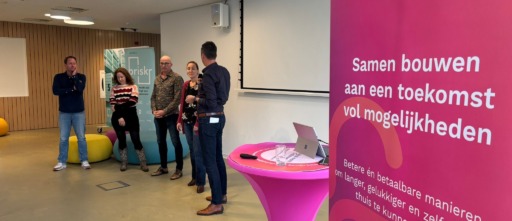
Remind is actively involved in the Nijmegen ecosystem and has already benefited from participating in the BANN programme. “The feedback was genuinely valuable. It helped us sharpen our story and look at it from a different angle.” The event also provided new contacts and introductions, some of which will play a role in the next phase of development.
What comes next
January’s launch marks a major turning point: the first real-world users, the first dataset and the first opportunity to prove the model’s value. From there, the roadmap moves through several phases: validating accuracy, expanding the user base, running the pilot with Hersenonderzoek.nl, iterating the product and then scaling towards B2B partnerships and insurance integration.
Ultimately, Remind wants to empower people long before dementia takes over their lives. If the team succeeds in delivering the evidence behind their promise, they could reshape how society approaches one of its most pressing age-related challenges.