Een Nederlandse chip die hartfilmpjes, hersenactiviteit en spierbewegingen opvangt met tien keer minder stroomverbruik dan de concurrentie. Sencure BV uit Nijmegen maakt zich op voor de marktintroductie begin 2027. Algemeen directeur Dick van Waes: ,,We lopen twee generaties voor.”
Van ziekenhuiskast naar pyjama
De chip van Sencure werkt als een uiterst zuinige versterker. Elektrische signalen van de huid — van een hartfilmpje tot hersenactiviteit en spiersamentrekkingen — worden met hoge kwaliteit opgepikt, zonder dat er een apparaat aan het stopcontact hoeft. Dat opent deuren die tot voor kort gesloten bleven. ,,Voor een goed hartfilmpje moest je naar het ziekenhuis. Met onze chip kunnen patiënten thuis blijven”, legt Van Waes uit.
Het bedrijf ontwikkelde een gepatenteerde techniek die ook met een matig huidcontact nog hoogwaardige metingen doet. Daardoor hoeven elektroden niet meer met plakkers op precies de juiste plek. Een Nederlandse start-up verwerkte de sensoren in een pyjamaatje voor kinderen met astma. ,,Onze chip meet op de borstkas hoe zwaar het middenrif moet werken. Het kind weet niet eens dat er gemeten wordt.”
Nijmegen als chip-hotspot
Sencure heeft zijn wortels in Noord-Nederland, maar sinds januari 2025 zit het bedrijf op de Novio Tech Campus in Nijmegen. Daar zit de grootste groep chipontwikkelaars van het land, met NXP, Nexperia en Ampleon als spin-offs van het oude Philips. De directeur ziet Nijmegen als onmisbare schakel in de Nederlandse halfgeleiderindustrie naast Eindhoven, Twente en Delft. ,,Je hebt hier een groot netwerk van mensen die weten wat ze doen.”
De combinatie van biomedische en elektronische kennis is wat Sencure uniek maakt. Twee grote Amerikaanse concurrenten maken vergelijkbare chips, maar die zijn lastig te integreren en verbruiken veel stroom. ,,We lopen een paar generaties voor op de concurrentie.”
Toepassingen tot ver buiten de zorg
De toepassingen reiken veel verder dan de medische wereld. Sencure praat met gaming-bedrijven over headsets die de alertheid van professionele gamers meten. Met een partij die tandenknarsen tijdens de slaap registreert én via een klein stroomschokje stopt. Met bouwbedrijven, defensie, luchtvaart en MARIN. Zelfs rolstoelbesturing via gedachten komt binnen bereik. ,,Dat bestaat al met algoritmes, maar wij maken het veel eenvoudiger met een simpele hoofdband.”
Koffie in de regio
Sencure telt nu 25 medewerkers en wil binnen een jaar verdubbelen. De algemeen directeur nodigt ondernemers uit de regio Arnhem-Nijmegen nadrukkelijk uit voor een gesprek. Vooral bedrijven die voor derden apparaten ontwikkelen — denk aan Demcon in Enschede of EPR in Nijmegen hoog op zijn lijstje. ,,Schroom niet. Of je nu in de bouw zit, defensie of luchtvaart, die chip kan in heel veel producten.”
Het werkende prototype is af, het definitieve ontwerp gaat deze maand naar de fabriek. ,,Het licht aan het einde van de tunnel is in zicht”, besluit de bevlogen directeur. Begin 2027 moet de chip commercieel beschikbaar zijn — een Nederlands product dat in Nederland wordt geproduceerd én getest.
Can materials function like the human brain? That fundamental question drives the research of Professor Alexander Khajetoorians at Radboud University.
As head of the Scanning Probe Microscopy department, part of the Institute for Molecules and Materials within the Faculty of Science, Khajetoorians explores how materials behave at the most fundamental level, down to individual atoms. Using one of the highest-resolution microscopes in the Netherlands, his team investigates the electronic and magnetic properties of materials to uncover entirely new functionalities.
“We are trying to understand previously undiscovered material properties and use them to develop a new generation of computer technologies,” he explains.
Towards Neuromorphic Computing
Khajetoorians’ work focuses on neuromorphic computing, computer architectures inspired by the structure and functioning of the human brain.
“We need radically more energy-efficient computing,” he says. “Today’s AI systems rely on enormous, energy-consuming data centers. If we continue expand our computing demands, the electricity demands will soon become unsustainable.”
To illustrate the urgency: training an AI system for a self-driving car can already require more energy than producing and operating the car itself.
Neuromorphic computing aims to change that paradigm. Instead of separating memory and processing — as conventional computers do — they try to mimic the brain integrate both, much like neurons and synapses in the brain. The result: faster, adaptive systems with dramatically lower energy consumption.
National efforts in Neuromorphic Computing
During the Lifeport Semicon Event 2026 at Goffertstadion, Khajetoorians was the keynote speaker in the Disruptive Technologies track, where he presented National Efforts in Neuromorphic Computing. As the sole speaker in this parallel session, he outlined how the Netherlands is positioning itself at the forefront of this emerging field.
Beyond energy efficiency, he emphasized broader societal drivers: technological sovereignty, security, and independence from global tech giants and critical supply chains.
“These are strategic questions,” he notes. “If we want Europe to remain competitive and autonomous in AI and advanced computing, we must invest in alternative technologies and new material platforms.”
Building a National Ecosystem: Neuromorphic NL
Khajetoorians has taken a leading role in strengthening collaboration between academia, industry, and government. Together in a national effort, Khajetoorians participated in drafting the white paper Neuromorphic Computing in the Netherlands, laying the foundation for a coordinated national strategy.
The initiative has been embraced by the Dutch Top Sector ICT (now Digital Holland) and translated into a national action plan aimed at accelerating research, innovation, and valorisation in neuromorphic technologies now found as Neurmorphic computing NL (nc-nl.com)
A key component of this effort is the research theme “Materials that Learn”, exploring adaptive materials capable of mimicking synaptic behaviour, while also addressing the responsible and ethical use of such technologies. This theme forms part of the new NWA-ORC 2026 programme of NWO under the Dutch National Science Agenda.
Lifeport as a Semiconductor Powerhouse
Khajetoorians also underlined the strategic importance of the Lifeport Region Arnhem-Nijmegen as the Netherlands’ second semiconductor hub.
“Many people immediately think of Eindhoven and ASML when it comes to semiconductors,” he says. “But this region hosts a powerful ecosystem of semiconductor companies, cutting-edge university research, innovative startups, government partners and educational institutions.”
The Lifeport Semicon Event, he adds, plays a crucial role in making this ecosystem visible and connecting stakeholders around urgent technological and societal challenges.
Christelle Le Cam werkt al ruim 25 jaar in de halfgeleiderwereld. Haar onderzoeksjaren in Eindhoven vormden het startpunt van een internationale carrière in chipinnovatie. In dit interview vertelt ze waarom de Lifeport-regio zo’n vruchtbare bodem is voor semicon-innovatie, waarom Europa moet versnellen en hoe Edge-AI de komende jaren onze wereld zal veranderen.
Waarom scoort de Lifeport-regio zo goed op technologie en R&D in de semiconductorsector?
“Deze regio is al decennialang een hotspot voor chipontwerp en -productie in Nederland,” antwoordt Christelle Le Cam, Senior Director Front End Innovation bij NXP Semiconductors. “Elke auto die wereldwijd van de band rolt, bevat chips die hier zijn ontworpen of geproduceerd. Dat zegt iets over de kracht van ons ecosysteem.”
Halfgeleiders zijn onzichtbaar, maar vormen de stille motor achter vrijwel alles wat we doen. Van gezondheidszorg tot energie en van landbouw tot mobiliteit: overal zitten chips in. “Juist in die domeinen heeft Nederland sterke posities,” vervolgt ze. “Landbouw rond Wageningen, energie in de regio Arnhem, medische innovaties in Nijmegen. Als we die werelden dichter bij elkaar brengen, ontstaat een versneller voor innovatie.”
De Noviotech Campus speelt daarin een belangrijke rol: “We bouwen daar aan een netwerk dat niet alleen laat zien wat er beschikbaar is, maar vooral waarom dat waardevol is.”
Talent is cruciaal
U benadrukt dat Europa moet investeren in technologie en partnerschappen om wereldwijd concurrerend te blijven. Welke stappen zijn daarin essentieel voor Lifeport Regio Arnhem Nijmegen?
“Talent is de sleutel,” antwoordt Le Cam zonder aarzelen. “Met de opkomst van AI hebben we nieuwe en andere competenties nodig. Dat betekent investeren in opleidingen en in het bijscholen van mensen die al in de sector werken. Langetermijninvesteringen in talent zijn uiteindelijk de motor van innovatie.”
Daarnaast is een aantrekkelijk vestigingsklimaat essentieel. “Denk aan de 30%-regeling, WBSO (Wet Bevordering Speur- en Ontwikkelingswerk) en subsidies voor R&D-projecten, zoals IPCEI (Important Project of Common European Interest). Omdat Gelderland hierin meefinanciert, ontstaan extra kansen om de regio te versterken.”
Ze verwijst ook naar het ‘rapport Wennink’, dat bedrijven oproept meer in R&D te investeren. “We moeten niet alleen naar kosten kijken, maar vooral naar waarde op de lange termijn. Maak het aantrekkelijk voor bedrijven om mee te doen.”
Ecosysteem
U geeft aan hoe belangrijk samenwerking is tussen bedrijven, kennisinstellingen en overheden. Kunt u een concreet voorbeeld noemen van zo’n succesvolle samenwerking in de regio?
“NXP is al jaren betrokken bij het Triple Helix-programma in het Brainport-ecosysteem,” vertelt Le Cam. “Dat model werkt goed. Ik denk dat vergelijkbare initiatieven ook hier in de Lifeport-regio kunnen groeien.”
De regio heeft volgens haar een unieke ‘semiconsignatuur’: “Bedrijven en kennisinstellingen werken hier al goed samen. Daardoor kunnen nieuwe ideeën snel worden getest en opgeschaald. Vooral in ontwerp, industrialisatie en advanced packaging liggen grote kansen, zeker nu producten steeds vaker meerdere chips en technologieën combineren.”
Slimme rekenkracht
U spreekt over ‘building systems at the edge’ en robotica. Hoe vertaalt dit zich naar toepassingen in de Lifeport-regio?
Le Cam: “Edge-AI betekent dat slimme rekenkracht niet in de cloud zit, maar in het apparaat zelf. In een auto, een machine, medische apparatuur. Dat maakt systemen sneller, veiliger en energiezuiniger. Niet alles kan of wil je naar de cloud sturen.” Bij NXP wordt wereldwijd samengewerkt aan deze technologieën. “Innovatie ontstaat zelden op één plek. Het is meestal een internationale inspanning.”
Gunstig innovatieklimaat
Welke initiatieven zijn nodig om jonge onderzoekers en ingenieurs aan te trekken en te behouden?
“Talent aantrekken en behouden gebeurt niet vanzelf,” aldus Le Cam. “Daarbij spelen verschillende voorwaarden mee, zoals een gunstig innovatieklimaat. Bedrijven kun je bijvoorbeeld stimuleren met belastingvoordelen of subsidies, zodat we blijven concurreren met landen met lagere lonen. Net zo belangrijk is dat gezinnen uitzicht hebben op een fijne toekomst, met goede huisvesting, scholen en bereikbaarheid.”
Noviotech Campus
Wat is de rol van Lifeport Regio Arnhem Nijmegen in internationale projecten? En wat betekent dit voor lokale bedrijven en startups?
Le Cam: “Nederland heeft een sterk ecosysteem van bedrijven, universiteiten, overheid en startups. Maar dat werkt alleen als we consistent blijven investeren. Programma’s als het FNS 6G groeifonds, IPCEI en WBSO helpen om innovatie en banen te behouden.
De grootste uitdaging is ervoor te zorgen dat regionale krachten goed worden benut en niet versnipperd raken. Met langetermijninvesteringen in talent kunnen we grote stappen maken.
De Noviotech Campus laat mooi zien hoe publieke en private partners samen een plek bouwen die samenwerking mogelijk maakt. Het uitbreiden van die campus is een mooie ambitie.”
Klaar voor de toekomst
Welke trends of doorbraken verwacht u de komende 5–10 jaar in de semiconductortechnologie en hoe kan de regio Arnhem–Nijmegen daarop inspelen?
“Door voort te bouwen op de samenwerking en innovatie die er al is, kan deze regio echt voorop blijven lopen in Edge-AI. AI komt steeds dichter bij mensen en apparaten, in auto’s, machines en medische apparatuur. Robotica spelen een steeds grotere rol in fabrieken en in ons dagelijks leven. Dat biedt enorme kansen: voor slimme technologie, nieuwe banen en een regio die klaar is voor de toekomst.”
Lifeport Semicon Event
Christelle Le Cam was keynotespreker tijdens het Lifeport Semicon Event op 27 januari. Haar lezing droeg de titel Intelligent Systems at the Edge through Successful Collaboration Across the Ecosystem.
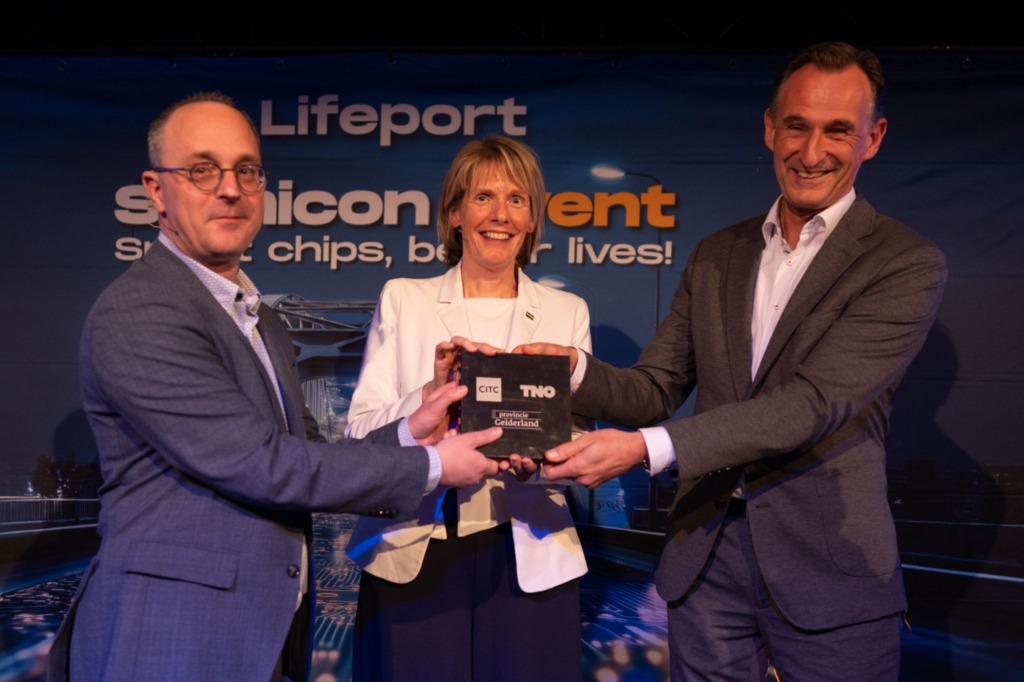
Op dinsdag 27 januari verzamelden vakgenoten zich in het Goffertstadion in Nijmegen voor een bijeenkomst vol nieuwe ideeën, frisse perspectieven, lezingen en gesprekken. Klein van schaal, groot in impact. Dit artikel is geschreven door Lifeport.
On January 27, 2026, the Lifeport Semicon Event brought together the Dutch semiconductor ecosystem at the Goffertstadion. Industry leaders, researchers, policymakers, educators and innovators met for a day defined by depth, openness and a shared sense of urgency.
More than 400 participants explored how semiconductors shape our future, not only from a technological perspective, but also through talent development, health applications and cross-sector collaboration. What stood out was the quality of the dialogue: strategic, forward-looking and rooted in real cooperation.
From cutting-edge research to future computing
One of the highlights of the programme was the keynote on neuromorphic computing by Alexander Khajetoriaans, offering a glimpse into how brain-inspired chip architectures could radically change the way we process information. His talk illustrated how fundamental research and semiconductor innovation are increasingly intertwined, and how Europe can play a leading role in this next wave of computing.
Across plenary sessions and deep-dive tracks, themes such as AI, advanced chip design, strategic resilience and Europe’s technological autonomy returned time and again, underlining the importance of long-term investment in both knowledge and people.
Innovation Square: where technology meets creativity and entrepreneurship
At the heart of the event, the Innovation Square showcased the region’s innovative strength. Entrepreneurs presented cutting-edge semiconductor applications alongside artistic interpretations of chip technology and its history. This unique combination of startups, scale-ups and art made abstract technology tangible and sparked conversations well beyond traditional sector boundaries.
The presence of students and young professionals, also actively involved in organisation, hospitality and content, further reinforced the event’s focus on learning, growth and future talent.
Semiconductors as an enabler for health and society
A recurring theme throughout the day was the crucial role semiconductors play in healthcare and life sciences. From medical devices and diagnostics to data-driven care and sustainable health systems, advanced chips are a key enabler of innovation in health. By explicitly connecting semicon technology with health applications, the programme highlighted why collaboration between these domains is essential for societal impact.
A shared ambition for the Lifeport region
The Lifeport Semicon Event made clear that the Arnhem–Nijmegen region is not only part of the semiconductor conversation, it actively shapes it. With strong research institutions, an engaged public sector and a growing innovation ecosystem, the region demonstrated its ability to connect strategy, execution and talent.
Above all, the event showed the power of bringing the right people together in the right setting. The atmosphere of trust and openness turned ambition into concrete steps forward.
With this first edition, the Lifeport Semicon Event set a strong foundation for the future. Building on this momentum, the community will continue to strengthen collaboration, invest in talent and work towards a resilient, innovative and impactful semiconductor ecosystem.
Het eerste Lifeport Semicon Event op dinsdag 27 januari toont baanbrekende innovaties als het gaat om chips, die ons leven en werken verbeteren. Deskundigen uit het bedrijfsleven, van overheden, universiteiten en andere kennisinstellingen uit Europa, ontmoeten elkaar in het Goffertstadion in Nijmegen om de laatste innovaties en kennis uit te wisselen. Semiconductors, oftewel halfgeleiders, zitten overal in, van onze telefoon en auto tot in zorgrobots. De ontwikkelingen gaan razendsnel, denk aan kunstmatige intelligentie (AI) en allerlei medische toepassingen.
Het Goffertstadion in Nijmegen huisvest het Lifeport Semicon Event, dat is geen toeval: de thuisbasis van profvoetbalclub NEC ligt op een steenworp afstand van NXP, dat chips ontwikkelt en produceert die wereldwijd worden gebruikt, en de Noviotech Campus waar veel andere hightech- en semiconbedrijven en veelbelovende start-ups zijn gevestigd. Samen met de Radboud Universiteit biedt dit semicon-ecosysteem uitgelezen mogelijkheden om de chips van de toekomst te ontwikkelen.
Tweede Semiconregio
Lifeport Regio Arnhem Nijmegen speelt, na Brainport Eindhoven, als tweede semiconregio van Nederland, nationaal en wereldwijd een toonaangevend rol. Er is bijvoorbeeld geen enkele auto ter wereld waar geen chips uit de regio in zitten. Ook in chiptechnologie gespecialiseerde bedrijven, die zich richten op medische toepassingen, zijn hier gevestigd en werken samen met bijvoorbeeld het Radboudumc en verzorgingshuizen.
Deelnemers uit het internationale bedrijfsleven en van universiteiten uit Nederland en België treffen elkaar op het event om op de hoogte te komen van de laatste semicon-innovaties en nieuwe contacten te leggen. ‘Met het event willen we deze beeldbepalende semiconregio versterken door de onderlinge en de internationale contacten te verstevigen’, zegt Bas Doets, programmamanager KplusV en Briskr.
Wetenschappelijke doorbraken
Nieuwe wetenschappelijke doorbraken op het gebied van chiptechnologie, zoals energiezuinige, fotonische chips, die werken met licht in plaats van elektriciteit, maar ook praktische toepassingen van semiconductors, het is allemaal te zien op het Lifeport Semicon Event.
Denk bijvoorbeeld aan de nieuwe generatie draagbare medische toepassingen (wearable health tech) met biosensor technologie voor astma- en hartpatiënten van het Nijmeegse bedrijf Sencure.
Beethoven-project
Ook vertegenwoordigers van onderwijs en overheden zijn van de partij en informeren de bezoekers over interessante samenwerkingen, subsidieregelingen en het Beethoven-project dat voorziet in het opleiden van zo’n 3.880 technische talenten voor de nationale semiconsector de komende jaren, waarvan 600 tot 700 in Lifeport Regio Arnhem Nijmegen.
Doets: ‘Het Beethovenproject richt zich op het opleiden van jonge mensen, maar ook in het bijscholen van professionals in de semiconregio’s Delft, Eindhoven, Arnhem-Nijmegen, Twente en Groningen.’
Blik op de toekomst
Burgemeester Hubert Bruls van Nijmegen heet de bezoekers van het Lifeport Semicon Event welkom tijdens de opening van het programma. Sprekers Paul de Bot, president van TSMC Europe en Christelle le Cam, technology & quality senior director NXP, praten het publiek bij over de laatste ontwikkelingen in de semiconsector.
Daarna kunnen bezoekers kiezen uit drie rondes met vijftien verschillende parallelsessies over uiteenlopende onderwerpen. Van The Chip of te Future en Disruptive Technology tot Tech & Talent.
Met diverse sprekers, die hun blik op de toekomst van de semiconsector geven, wordt het evenement afgesloten.
Chip van de toekomst
Halfgeleiderproducent NXP in Nijmegen werkt aan de ontwikkeling van de intelligente chip van de toekomst, die onder meer robots slimmer en veiliger maakt. Daan Daverveld gaat dieper in op de ontwikkeling van deze nieuwe generatie semiconductors in de parallelsessie Chip of the Future, Robotic Innovation at NXP: Shaping the Future of Intelligent Machines.
Daverveld werkt als product portfolio & marketing manager bij NXP en is gastonderzoeker bij de Technische Universiteit Eindhoven. ‘Het gaat over de huidige impuls en ontwikkelingen in robotics. De integratie van ‘AI on the edge’ is hierbij een belangrijke accelerator’, meldt Daverveld. ‘De complexiteit van moderne robotica en hoe we betrouwbare chips voor onder meer drones, service robots en mobile platforms ontwikkelen, komt ook aan de orde.’
Disruptive Technology
Hoogleraar Scanning Probe Microscopy aan de Radboud Universiteit Alex Khajetoorians is ook één van de sprekers tijdens het Lifeport Semicon Event. Hij verzorgt de parallelsessie Disruptive Technologies met als titel National Efforts in Neuromorphic Computing. Bij neuromorphic computing wordt onderzoek gedaan naar nieuwe materialen voor een volgende generatie super-efficiënte computers gebaseerd op de werking van de menselijke hersenen. Khajetoorians gebruikt onder meer een super microscoop met de hoogste resolutie in Nederland, waarmee hij op atoomniveau onderzoek doet naar de elektronische en magnetische eigenschappen van materialen.
Fotonische geheugentechnologie
Internationaal opererende bedrijven, maar ook hypervernieuwende startende ondernemers presenteren zich op het Innovatieplein. Eén van die startende, jonge ondernemers is Irina Dolgikh. Ze studeerde natuurkunde en kwam als PhD naar de Science faculteit van de Radboud Universiteit. Met een gepatenteerde fotonische geheugentechnologie van de universiteit heeft ze inmiddels het bedrijf AIMA Technology opgericht.
‘Als ondernemer kan ik deze wetenschappelijke kennis vertalen naar een toepassing waar de samenleving wat aan heeft’, zegt Dolgikh. ‘Fotonische technologie werkt op basis van licht in plaats van elektriciteit. Het is de snelste manier om informatie te verwerken voor zover we weten. Dat is belangrijk voor het beter en veiliger functioneren van bijvoorbeeld datacenters en navigatie in auto’s en vliegtuigen.’
Bas Doets, Marieke Snieder en teamleden Briskr
Uitgelezen kans
Voor de jonge ondernemer biedt het Lifeport Semicon Event een uitgelezen kans om een netwerk op te bouwen en contact te leggen met mogelijke klanten. ‘Zo’n event is voor mij cruciaal. Fotonische technologie groeit hard in Nederland en de regio Arnhem Nijmegen speelt daarbij een belangrijke rol in de ogen van Dolgikh. ‘Het is voor mij vanzelfsprekend dat ik mijn bedrijf in deze regio, dichtbij Twente en Eindhoven, vestig. Ik wil dicht bij de kennis over photonic technology blijven. De Radboud Universiteit helpt start-ups, zoals AIMA, bijvoorbeeld met de toegang tot kennis.’
Eerste halfgeleiderfabriek
Studenten van ArtEZ Hogeschool voor de kunsten in Arnhem hebben een bijzondere historische presentatie gemaakt over het ontstaan van de chipindustrie in Nijmegen, die tijdens het Lifeport Semicon Event te zien is. De eerste halfgeleiderfabriek is in 1953 door Philips in Nijmegen gebouwd. De semiconductorindustrie is dus al meer dan zeventig jaar gevestigd in de regio Arnhem Nijmegen.
‘De eerste chips waren 16 microbites groot. We hebben een 16 meter lange tekening van het ontwerp van zo’n chip in de presentatie’, vertelt Marieke Snieder, communicatie & events bij Briskr. ‘Dat is een echt artefact.’
De chipstechnologie en Philips Semiconductors maakten een stormachtig groei door. Philips verzelfstandigde zijn halfgeleidersactiviteiten in 2006, zo is NXP ontstaan waaruit later bedrijven als Nexperia en Ampleon zijn voortgekomen. Rond deze bedrijven is de semiconregio Arnhem Nijmegen gegroeid, bestaande uit een uitgebreid netwerk van andere chipbedrijven en high tech-service- en toeleveringsbedrijven, die voor veel economische activiteiten zorgen.
Yesterday, we hosted another successful edition of the Briskr Company Valuation Workshop, an important step in the trajectory towards pitching at the Business Angels Network Nijmegen (BANN) in March. A diverse group of entrepreneurs joined: founders who have already pitched at BANN, those preparing for an upcoming pitch, and others eager to strengthen their investment readiness. Together, they created an open, energetic atmosphere where sharing experiences and learning from each other came naturally.
Sjoerd Klabbers (BDO Tax & Legal) guided participants through the fundamentals of startup valuation. Determining a company’s worth is rarely simple, especially when emotions, early-stage uncertainty and a mix of valuation methods all come into play. Sjoerd broke down the essentials, offering practical tools to help founders understand their value drivers, prepare for investor conversations, and set the right conditions for future deals.
In the second part of the workshop, Björn Schaap (Oost NL) invited participants to step into the investor’s shoes. What do investors really look for? How do they assess a business case, and what do they expect from entrepreneurs, not just today but once they become shareholders? His session emphasized alignment and long-term partnership: it’s not about claiming the biggest slice of the pie, but about working together to make the pie grow.
As always at Briskr events, the networking moments proved just as valuable as the content. Entrepreneurs exchanged challenges, insights, and experiences, strengthening the community that helps fuel innovation in our region. A big thank you to all participants, and to Sjoerd and Björn for sharing their expertise. We look forward to seeing these founders take their next steps!
We would also like to extend a heartfelt thank-you to Sjoerd Klabbers, who has delivered this workshop with dedication and expertise three times a year since 2023. His insights have been invaluable to countless entrepreneurs preparing for their next growth step.
Defensie wil dat onderzoeksinstellingen hun dual-use kennis naar de markt brengen. Zo kan op den duur ook de krijgsmacht ervan profiteren. Er komt € 13,8 miljoen euro beschikbaar voor de oprichting van dual-use startups. Die gaan zich richten op high-tech ontwikkelingen voor zowel militaire als civiele toepassingen.
De nieuwe startups moeten betrekking hebben op een van de 5 defensiethema’s. Dat zijn: slimme materialen, ruimtevaarttechnologie, quantumtechnologie, intelligente systemen en sensoren. Binnen het programma zullen verschillende kennisinstellingen met elkaar samenwerken. Door van elkaars expertise gebruik te maken zijn ze in staat om innovatie sneller naar de markt te brengen.
Van kennis naar praktijk
De subsidie valt onder de bestaande subsidieregeling Thematische Technology Transfer (TTT). Deze regeling is bedoeld om kennis uit onderzoek sneller om te zetten in praktische oplossingen. Vanuit het programma worden innovatievouchers uitgekeerd aan startende ondernemers. Bijvoorbeeld om hun innovatie door te ontwikkelen naar een product. Daarnaast krijgen de nieuwe bedrijven vanuit het programma begeleiding en ondersteuning in het ondernemerschap. Verder wordt er in samenwerking met particuliere investeringsmaatschappijen een fonds opgericht. Daaruit kunnen de startups een eerste investering krijgen. Dat startkapitaal maakt het mogelijk om te blijven ontwikkelen en door te groeien.
Consortia van kennisinstellingen kunnen nog tot en met 15 april hun aanvraag voor een TTT programma indienen.
Meer informatie
De TTT-tender Defensie is een samenwerking tussen het ministerie van Defensie en de Rijksdienst voor Ondernemend Nederland (RVO). Meer informatie over de regeling en de voorwaarden is te vinden via RVO.
De wereldwijde vraag naar chips stijgt explosief en zal richting 2030 zelfs verdubbelen. Europa wil de afhankelijkheid van Azië en de Verenigde Staten verminderen en investeert daarom stevig in de eigen halfgeleidersector. In dit kader is in oktober 2025 het ChipNL Competence Centre gelanceerd: een one-stop-shop die Nederlandse bedrijven, onderzoekers en onderwijsinstellingen ondersteunt bij innovatie, opschaling en samenwerking in de semiconductortechnologie.
Managing Director Elly Zwartkruis ziet het centrum als een essentiële schakel in de versterking van zowel Nederland als Europa, dat daarmee naadloos aansluit bij de ambities van de European Chips Act. “Het ChipNL Competence Centre is een van de 30 competentiecentra in Europa, die een groot netwerk vormen om gezamenlijk de chipinnovatie te bevorderen. We zijn een netwerkorganisatie die ondernemers helpt versnellen op het gebied van semiconductortechnologie,” zegt ze. “Dat doen we met technische expertise, toegang tot het Chips Design Platform, de EU pilotlines, business development, talentontwikkeling en internationalisering.”
Eén loket, landelijk bereik
Hoewel de standplaats van Zwartkruis Eindhoven is, werkt het centrum nadrukkelijk landelijk. “Alle semiconregio’s in Nederland zijn aangesloten,” benadrukt Zwartkruis. “Van Delft en Twente tot Eindhoven en dus ook de Lifeport-regio. Ons centrum verlaagt de drempels voor startups en kleinere bedrijven. Het ChipNL Competence Centre biedt hun directe toegang tot toonaangevende Europese infrastructuren, zoals pilotlines en het EU Chips Design Platform. Ook kunnen zij gebruikmaken van de beschikbare faciliteiten en initiatieven in Nederland.”
Begeleiding op maat
Voor veel mkb-bedrijven is een eigen cleanroom of miljoenenlab onbereikbaar. Het ChipNL Competence Centre helpt hen om wél toegang te krijgen tot geavanceerde faciliteiten en begeleidt hen gedurende het hele innovatietraject: “We kijken heel precies welke vraag een ondernemer heeft en bij welke pilotline of expertise die het beste past,” aldus Zwartkruis. “Ondernemers worden niet alleen doorverwezen, maar echt begeleid.”
Behalve technische ondersteuning is er hulp voor de complexe materie van subsidies en fondsen. “Wij bieden zelf geen financiering, maar maken bedrijven wegwijs door het landschap van Europese, nationale en regionale subsidie- en financieringsmogelijkheden. Juist voor mkb-bedrijven is dit overzicht van financieringsinstrumenten essentieel. Deze ondersteuning is volledig kosteloos dankzij bijdragen van de Europese Commissie en het Ministerie van Economische Zaken en Klimaat.”
Talentontwikkeling
De groeiende chipvraag gaat hand in hand met een bijna explosieve vraag naar technisch talent. Nederland werkt via het landelijke Project Beethoven aan de ambitie om 38.000 nieuwe technici op te leiden.
“Er komen nieuwe minors, fieldlabs, cleanrooms en praktijkgerichte programma’s,” vertelt Zwartkruis. “Wij verbinden al die initiatieven met de concrete behoefte van bedrijven. Dat doen we voor mbo, hbo, universiteit én professionals die willen bij- of omscholen. Talentmatchmakingevents zijn een belangrijk instrument om vraag en aanbod bij elkaar te brengen, zowel voor studenten als voor mensen die een carrièreswitch overwegen.”
Medtech kansen in de regio
Juist in de Lifeport Regio Arnhem Nijmegen en in Wageningen liggen veel kansen, door de samenkomst van sterke expertisevelden: enerzijds chipdesign, packaging en productietechnologie; anderzijds een krachtig medtech-ecosysteem met universiteiten, ziekenhuizen en onderzoeksinstellingen.
“Energiezuinige, efficiënte chips worden steeds belangrijker voor medische toepassingen en geneesmiddelenontwikkeling,” legt Zwartkruis uit. “We willen partijen uit de tech- en medische domeinen actief bij elkaar brengen, juist wanneer zij elkaar nog niet vanzelf weten te vinden.”
Fotonica
Het ChipNL Competence Center ziet fotonica als een sleuteltechnologie waarin Nederland al sterk is en waar grote toekomstkansen liggen. “Fotonische chips zijn energiezuinig en efficiënt en kunnen veel betekenen voor sectoren als gezondheidszorg, sensortechnologie en communicatie,” aldus Zwartkruis. “Ons centrum stimuleert innovaties en initieert samenwerkingen op dit gebied via gerichte workshops, beurzen en pilotline-bezoeken.”
Onmisbaarheid in de keten
Het ChipNL Competence Center kijkt naar de bredere positie van Nederland binnen het Europese ecosysteem en in de internationale waardeketen. Zwartkruis ziet kansen om de rol van Nederland, dat nu vaak toeleverancier is, te versterken. “Het gaat om je onmisbaarheid in de keten,” legt ze uit. “Waar zit je kracht, in welke mate hangt de rest van de waardeketen van jouw producten of diensten af? Nederland heeft een sterke positie en werkt aan nieuwe innovaties om deze positie in de toekomst verder te verankeren.”
Het centrum helpt bedrijven bij opschaling, het vinden van nieuwe markten en het toekomstbestendig maken van hun technologie.
Maatschappelijke uitdagingen
Elly Zwartkruis: “Met mijn achtergrond in economische psychologie en in techniek pionier ik graag in innovatie. Vooral in de halfgeleiderindustrie zie ik de sleutel tot onze maatschappelijke uitdagingen. Het is een prachtige rol om samen met verschillende partijen vooraanstaande kennis toegankelijk te maken voor het Nederlandse en Europese bedrijfsleven.”
De ambitie is helder: “We hopen binnen een jaar de spil te worden in de Nederlandse halfgeleiderindustrie, waar bedrijven samenkomen om innovatie te versnellen en onze internationale positie uit te bouwen.”
Lifeport Semicon Event
In de Lifeport-regio werken bedrijven en kennisinstellingen samen aan innovaties in chiptechnologie en chip-packaging. Deze ontwikkelingen staan centraal tijdens het Lifeport Semicon Event in januari 2026.
Lecturers want to give good feedback. Students want to learn. Yet in most universities, both sides know the truth: there simply aren’t enough hours in the week. That tension, familiar to anyone who has ever marked a stack of essays, is exactly where Eduface steps in.It gives lecturers instant, detailed and domain-aware feedback on student writing, making high-quality assessment possible even when time is tight.
It began with a student’s frustration about a teacher not being able to provide the feedback they both wished for. Eduface has now grown into a fast-moving edtech startup with its own AI model, purpose-built for higher education. Today, Eduface is helping universities rethink how feedback, assessment and learning can actually work when time is no longer the bottleneck.
Born from a simple question: “Can you give me feedback?”
For CEO and co-founder Jeroen van Gessel, the idea emerged during his studies in Commercial Economics at Leiden University of Applied Sciences. When he asked a lecturer for more detailed feedback, he received a curt but honest response: “If I do this for you, I have to do it for 80 others. I simply don’t have the time.” Later, the lecturer admitted: “I wish I could give you this type of feedback — I just can’t.”
It was a problem Jeroen kept running into. He remembers that during his law courses in Leiden, the only real one-to-one conversation he ever had was with the receptionist when his student card stopped working — a clear sign, he says, of how little space there is for genuine dialogue in today’s lecture-heavy system.
A purpose-built AI model for education
With AI still relatively new at the time, he reached out to Menno Hahury, a technically minded AI student at Radboud University, and suggested building something that could actually close that gap. Menno joined full-time as CTO, completing his bachelor became a side project.
The team first experimented with off-the-shelf AI models, but soon discovered their limits: vague feedback, privacy risks, and models not trained for educational use. Menno explains: “General models are trained for millions of tasks. We needed a model specialised in feedback and grading. That meant building our own.”
Eduface now runs on an in-house model hosted on Dutch servers, trained specifically for academic feedback across six domains: from law and economics to STEM and health sciences. Unlike generic AI, it checks arguments, identifies factual errors, looks up jurisprudence, and comments directly in the student’s text. Eduface actively retrieves subject-specific information before reviewing a text, allowing it to fact-check claims and assess content with far greater precision.
Making high-quality feedback feasible
Eduface analyses both the assignment and the rubric, then generates highly specific, contextual feedback like academic writing issues, reference errors, and accuracy. The tool highlights passages in the document and suggests concrete improvements.
Jeroen illustrates the difference: “If you write a paper about parking an elephant in a living room, ChatGPT will talk about your introduction and conclusion. It won’t say: that’s impossible. Our model actually checks the content.”
Lecturers using Eduface often report that the tool returns more feedback than they can realistically provide themselves. Early pilots at Dutch universities show consistent improvements in writing quality, more formative feedback moments, and significant time savings.
Towards more meaningful education
Both founders see Eduface as a catalyst for a deeper shift in higher education. Jeroen argues that many exam formats exist not because they support good learning, but because they are practical to mark at scale. With AI easing the marking burden, institutions can move towards more active, practice-based learning.
For universities exploring programmatic assessment rather than one final exam, Eduface provides the missing infrastructure. “Educators have been wishing for this shift for years”, Jeroen says, “but it simply seemed too time-consuming. Tools like ours finally make grading based on multiple data points possible.”
He also hopes the tool frees lecturers to guide students in other ways: “I hope it allows lecturers to sit one-on-one with students more often, or in small groups. That’s where real learning and inspiration happens.”
Growing traction at home and abroad
Eduface is already used by several Dutch institutions, with strong results. In a recent survey with around 200 students, 89% preferred Eduface’s feedback over what they previously received. International interest is building fast too. Eduface recently won a UK tender, making them preferred supplier for universities across the country.
Through Briskr and BANN, Eduface is actively building its network. For the founders, the programme offers exactly what a growing edtech company needs: access to expertise and introductions to investors and institutions. They are currently exploring investment to expand their team and further expand their operations.
Digital sovereignty and the future of AI in education
As European institutions search for alternatives to US-based AI, Eduface positions itself as a sovereign, education-first solution. It trains its models without storing student data, and collaborates with lecturers and professors to refine domain expertise.
The long-term ambition is clear: personalised learning at scale. Eduface wants to help universities identify how each student learns best, where they excel, and where they need support. With institutions across Europe rethinking their approach to assessment, Eduface sees personalised learning as the next step in education.
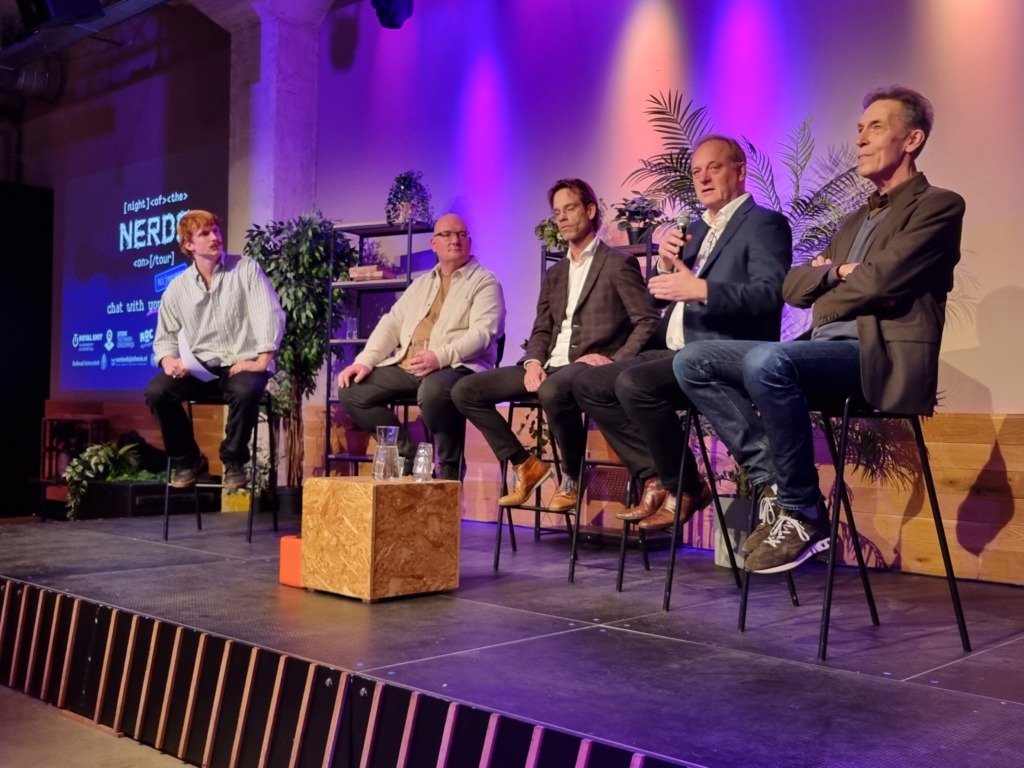
Gisteren stond de Vasim helemaal in het teken van nieuwsgierigheid, innovatie en ontmoeten tijdens Night of the Nerds on Tour. Vanuit het regionale semicon-netwerk droegen we bij aan een inspirerende kennis- en netwerksessie, midden tussen honderden middelbare scholieren die alvast even konden proeven aan de wereld van techniek, chips en AI.
Vooraf namen we een kijkje op het innovatieplein, waar leerlingen hands-on ontdekten hoe breed de wereld van techniek en semicon inmiddels is en hoe belangrijk AI daarbij is geworden. Want wie denkt dat je er alleen een technische achtergrond voor nodig hebt, heeft het mis: toepassingen van AI vragen juist óók om een sociaal-culturele blik – en dat werd de rode draad van de middag.
Een ijzersterke inhoudelijke sessie
De netwerkbijeenkomst startte met een krachtige, heldere keynote van Danny Bloks (Fontys ICT). Zijn verhaal over AI for Society en het boek Leven en leren met AI maakte diepe indruk. Hierna volgde een panelgesprek over AI & onderwijs met naast Danny twee experts en organisatro Maurice Schmitz van Night of the Nerds. Marcel Rijnsburger (NXP) bracht het perspectief vanuit de industry en vertelde hoe AI-vaardigheden steeds crucialer worden, en hoe bedrijven en scholen samen kunnen optrekken. Roald Verhoeff (NOLAI / Radboud Docenten Academie) deelde onderzoek en praktijkvoorbeelden die direct toepasbaar zijn in het klaslokaal. Het panelgesprek was levendig en relevant: van ethiek tot vaardigheden en van kansen tot verantwoordelijkheden. Een mooie kruisbestuiving tussen verschillende werelden!
Lang napraten tijdens de borrel Na afloop werd er nog lang nagepraat tijdens de netwerkborrel. Docenten, partners en professionals uit het semicon-netwerk vonden elkaar moeiteloos in gesprekken over talentontwikkeling, het versterken van de regio en de rol van AI in het onderwijs van morgen.