Op 5 maart organiseren wij een inspirerende middag voor partners, nieuwe partners en innovators om de nieuwe ronde van het Digital Health Challenge Lab (DHCL) te verkennen. Ontdek lopende projecten, leer nieuwe innovators kennen en maak waardevolle verbindingen.

Het Digital Health Challenge Lab (DHCL) is een open innovatieprogramma waarin zorg- en welzijnsorganisaties, ziekenhuizen, woningcorporaties, startups, kennisinstellingen en bedrijven samenwerken aan echte uitdagingen uit de praktijk.
In co-creatie ontwikkelen we digitale oplossingen die werken; getest, toegepast en klaar voor opschaling.

Datum: 5 maart 2026
Tijd: 14.00 – 17.00 uur
Locatie: Noviotech Campus – gebouw M

Wat kun je verwachten?

  • Introductie van DHCL en de challenges van 2026
  • Pitches van innovators en startups
  • Netwerkmoment met andere betrokken partners van DHCL
  • Inzicht in actuele projecten en kansen voor samenwerking

Programma:

13:45 uur: Inloop

14:00 uur: Aftrap en plenair programma

15:00 uur: Informatie over DHCL en verdieping voor nieuwe partners

16:30 uur: Netwerken

17:00 uur: Afsluiting

Voor wie?
Huidige partners, nieuwe partners, innovators en organisaties die willen kennismaken met DHCL en de nieuwste challenges.

Aanmelden kan via de onderstaande button onder het filmpje. Zet 5 maart alvast in je agenda.

Een jaar na de start laat het Digital Health Challenge Lab (DHCL) zien wat er gebeurt als je innovatie écht begint bij de vraag uit de wijk.

In dit nieuwe artikel van ICT&health, geschreven door HAN University of Applied Sciences, partner van DHCL, wordt mooi beschreven hoe DHCL is gegroeid van project naar een lerende innovatie community.

Samen met zorg-, welzijns-, woon-, onderwijs- en innovatiepartners zijn inmiddels 65 knelpunten uit drie wijken in de regio Arnhem–Nijmegen opgehaald. Op basis daarvan zijn zes nieuwe challenges gestart, variërend van de overbelaste huisartsenzorg tot empathische AI en veiligheid voor zorgprofessionals. De eerste co-creatietrajecten lopen, met ondernemers en probleemhouders zij aan zij.

Benieuwd hoe vraaggestuurd innoveren er in de praktijk uitziet, en hoe DHCL verder groeit? Lees het artikel in ICT & Health: https://lnkd.in/ejKSEu63

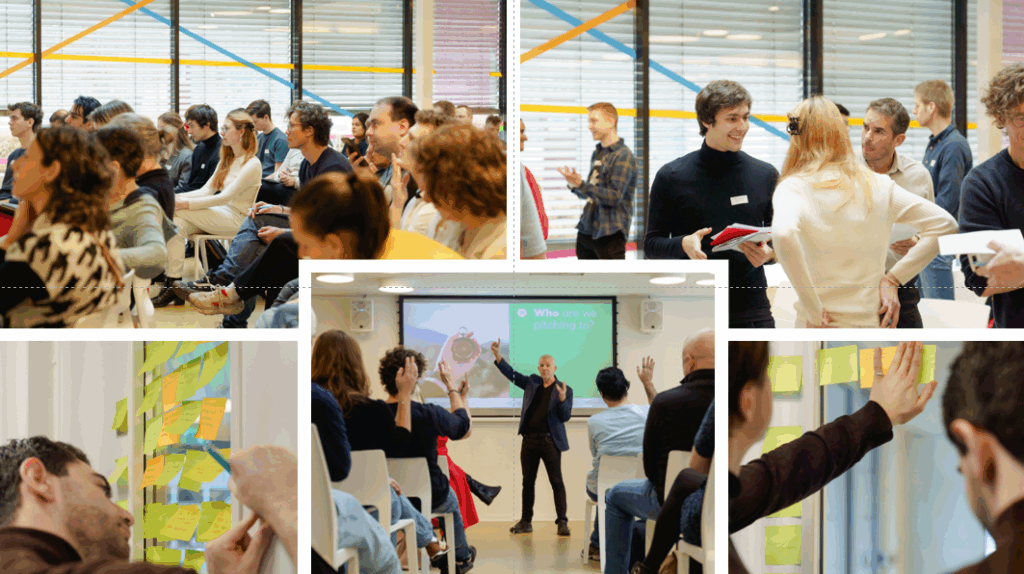
Master the Art of Pitching with International Coach David Beckett!

Back by popular demand, this workshop is your opportunity to learn the secrets of crafting a winning pitch from one of the best in the business. David Beckett, an internationally renowned pitch coach, has helped over 2.500 startups and scaleups secure more than €460 million in funding. Now, he’s ready to help you sharpen your pitch skills in a dynamic, hands-on session.

In this fast-paced workshop, you’ll dive into practical techniques to build a compelling storyline, make your message clear and unforgettable, and deliver a powerful opening and closing. With fun, interactive exercises, you’ll practice each step and gain confidence in presenting your pitch with impact.

Plus, you’ll leave with exclusive resources and access to David’s Pitch App, designed to help you perfect your pitch long after the workshop ends. Whether you’re preparing a pitch for investors, clients, or networking events, this is your chance to stand out and make a lasting impression.

Don’t miss this chance to elevate your pitch game and join a community of ambitious professionals!

Afterwards, you’ll receive a selection of materials and access to an App that will help you deliver your winning pitch, handshake pitch and/or elevator pitch

David Beckett Bio

David Beckett is an International Pitch Coach, who has trained over 2900 Startups and Scaleups to win over €490Million in investment. He’s also trained more than 41,000 professionals at companies such as Vodafone, Tommy Hilfiger, PwC and AirFrance KLM, in 33 countries – as well as over 30 TEDx speakers. David is the creator of The Pitch Canvas©, and author of the books Pitch To Win and Long Story Short.

LinkedIn: https://www.linkedin.com/in/davidbeckettpresentationcoach/

Location
The Launch, Nijmegen.

The Forum building is on the Radboudumc campus. Closest train station is Nijmegen Heyendaal. The distance is walkable, but you can also take bus 10 to halte ‘Huygensgebouw, Nijmegen’ (and then walk 2 minutes).
 
Good to know
The workshop is facilitated in English and is free of charge and organised together with The Launch.

Participation in the workshop is free for everyone, including drinks and bites. However, for noshow and cancellations within 24 hours prior to the event, we will charge a fee of 15 euros (excluding VAT) to cover incurred expenses.

In een laboratorium op de Nijmeegse Campus Heyendaal werkt een gedreven team aan een grote missie: kanker voorkomen door vroegdetectie, en behandeling van kanker en andere ziekten fundamenteel verbeteren.
William Leenders, voormalig universitair hoofddocent aan het Radboudumc, en Marco de Boer, biotech-ondernemer, zijn de oprichters van Predica Diagnostics. Hun technologie kijkt niet naar DNA, zoals gebruikelijk, maar naar RNA, en dat maakt een wereld van verschil.

Links Marco de Boer rechts William Leenders

Links Marco de Boer en rechts William Leenders

Van academie naar praktijk

William Leenders deed jarenlang onderzoek naar kanker aan het Radboudumc. Hij raakte gefascineerd door personalized medicine, maar zag ook de beperkingen ervan. “Veel patiënten reageren niet op therapie, en dat heeft alles te maken met de manier van diagnostiek,” vertelt hij. “DNA-analyses die tegenwoordig regelmatig gedaan worden geven informatie over genetische mutaties, maar zeggen niets over de activiteit van genen. RNA vertelt ons juist welke genen aan of uit staan, én levert gelijktijdig informatie over mutaties.”

In 2017 ontwikkelde Leenders een robuuste RNA-test op basis van Next Generation Sequencing. Omdat deze techniek veelbelovend bleek te zijn voor de patiëntenzorg, besloot hij samen met Marco de Boer in 2019 Predica Diagnostics op te richten.

Een krachtige technologie

Marco de Boer, gepromoveerd moleculair bioloog, had al ervaring met het opzetten van biotech bedrijven. Na het verlies van een dierbare aan kanker was de stap naar Predica snel gezet. “William zocht iemand met bedrijfservaring, en ik wilde iets doen dat impact heeft,” zegt hij. Als algemeen directeur houdt hij zich bezig met de zakelijke kant, terwijl Leenders zich richt op de wetenschap.

De technologie van Predica is gebaseerd op RNA-analyse via Next Generation Sequencing. Waar DNA-analyses mutaties opsporen, kijkt RNA naar genactiviteit. “Dat is cruciaal,” legt De Boer uit. “Bijvoorbeeld bij baarmoederhalskanker, dat veroorzaakt wordt door het HPV-virus. Veel vrouwen zijn besmet met HPV, maar slechts een klein deel loopt daadwerkelijk risico. Onze test kan in een uitstrijkje meten welk HPV-virus aanwezig én actief is, en of kankergenen actief zijn. Daarmee kunnen we veel beter voorspellen wie risico loopt.”

Focus op women’s health

Hoewel de technologie breed toepasbaar is – van hersentumoren tot longkanker – kiest Predica bewust voor focus. “We richten ons nu op women’s health,” zegt Leenders. “We kijken bijvoorbeeld ook naar het microbioom bij vrouwen dat een algemene impact heeft op gezondheid,  naar endometriose en natuurlijk baarmoederhalskanker. Daar zit een enorme unmet need.”

Die keuze is deels praktisch: uitstrijkjes zijn relatief eenvoudig te verkrijgen als klinisch materiaal. Maar het is ook strategisch. “Tot voor kort werd er weinig ontwikkeld voor vrouwen,” zegt De Boer. “Veel medische innovaties waren gericht op mannen. Nu is er meer aandacht voor women’s health, en wij willen daar een bijdrage aan leveren.”

Baarmoederhalskanker is wereldwijd een van de meest voorkomende vormen van kanker bij vrouwen. “Er is al veel overtuigend bewijs dat baarmoederhalskanker voorkomen kan worden met vaccinatie tegen HPV, maar dat werkt alleen bij meisjes die nog nooit een HPV infectie hebben doorgemaakt. Bovendien, met de huidige lage vaccinatiegraad van 60 procent,  blijft screening de komende decennia cruciaal,” aldus Leenders.

Slimmer screenen, minder onnodige doorverwijzingen

De huidige screeningsmethode is niet efficiënt. Het begint met een test op aanwezigheid van HPV in een vaginale zelfafname die een vrouw thuis kan doen, of in een uitstrijkje die door de huisarts wordt genomen. Wanneer HPV aangetoond is, wordt een uitstrijkje onder de microscoop onderzocht (de PAP-test). Wanneer dat onderzoek afwijkende cellen laat zien, volgt een onderzoek door een gynaecoloog. “De onnauwkeurigheid van de PAP-test leidt tot veel onnodige doorverwijzingen,” zegt De Boer. “Onze test kan direct uit het eerste monster bepalen of er sprake is van HPV activiteit én of er wel of niet sprake is van kankerontwikkeling . Dat maakt het proces veel efficiënter.”

De Europese Unie heeft om deze reden recent geadviseerd om de PAP-test af te schaffen. “Dat onderstreept de noodzaak voor betere testen,” zegt Leenders. “Onze technologie valt precies in die categorie.”

Gebruiksvriendelijk, schaalbaar en kosteneffectief

Een belangrijk voordeel van de technologie is de schaalbaarheid. “We kunnen tot 4000 uitstrijkjes tegelijk analyseren,” zegt De Boer. “Dat maakt de test kosteneffectief.” Bovendien heeft Predica eigen software en algoritmes ontwikkeld, waardoor de analyse en rapportage grotendeels geautomatiseerd zijn. “Je hebt geen bioinformatici meer nodig. Dat maakt het toegankelijk voor laboratoria.”

De technologie bevat ook elementen van kunstmatige intelligentie (AI), die helpen bij het interpreteren van de complexe data. “Het klinkt misschien ingewikkeld en duur,” zegt Leenders, “maar we hebben het juist versimpeld en betaalbaar gemaakt.”

Samenwerkingen en internationale interesse

Predica werkt nauw samen met het Radboudumc, waar de technologie is ontwikkeld en gepatenteerd. De patenten staan op naam van het Radboudumc en Predica heeft de wereldwijde exclusieve rechten. “We hebben afspraken gemaakt dat wij die patenten mogen gebruiken om producten te ontwikkelen. En als tegenprestatie betalen wij in de toekomst weer een stukje geld terug op het moment dat wij producten verkopen,” zegt De Boer

“En we hebben een nauwe samenwerking met oncologen en gynaecologen daar. Zij zijn onze early adopters.”

Ook internationaal groeit de interesse. Sequencer fabrikant MGI vond de technologie zo veelbelovend dat ze een apparaat bij Predica hebben geplaatst. “Dat stelt ons in staat om sequencing zelf te doen,” zegt De Boer.

Daarnaast is Predica in gesprek met bedrijven die de technologie willen inlicenseren voor andere toepassingen. “We hebben vorig jaar ons eerste product gelanceerd,” zegt De Boer. “Labs gebruiken het al, en dat wekt vertrouwen. Nu zoeken we partners om verder te groeien.”

Sterk ecosysteem in Nijmegen

De regio Arnhem-Nijmegen biedt een vruchtbare bodem voor innovatie. Predica ontving financiering van onder andere OostNL en groeivouchers via Briskr. “Dat heeft ons echt geholpen om stappen te zetten,” zegt De Boer.

Een technologie met toekomst

Predica Diagnostics staat aan het begin van een veelbelovende reis. Met een innovatieve RNA-technologie, een duidelijke focus op women’s health en een sterke wetenschappelijke basis, heeft het bedrijf alles in huis om de diagnostiek van kanker en andere ziekten te verbeteren. “We weten dat onze technologie werkt,” zegt Leenders. “Nu is het tijd om die impact ook in de kliniek te realiseren.”

Lecturers want to give good feedback. Students want to learn. Yet in most universities, both sides know the truth: there simply aren’t enough hours in the week. That tension, familiar to anyone who has ever marked a stack of essays, is exactly where Eduface steps in. It gives lecturers instant, detailed and domain-aware feedback on student writing, making high-quality assessment possible even when time is tight.

It began with a student’s frustration about a teacher not being able to provide the feedback they both wished for. Eduface has now grown into a fast-moving edtech startup with its own AI model, purpose-built for higher education. Today, Eduface is helping universities rethink how feedback, assessment and learning can actually work when time is no longer the bottleneck.

Born from a simple question: “Can you give me feedback?”

For CEO and co-founder Jeroen van Gessel, the idea emerged during his studies in Commercial Economics at Leiden University of Applied Sciences. When he asked a lecturer for more detailed feedback, he received a curt but honest response: “If I do this for you, I have to do it for 80 others. I simply don’t have the time.” Later, the lecturer admitted: “I wish I could give you this type of feedback — I just can’t.”

It was a problem Jeroen kept running into. He remembers that during his law courses in Leiden, the only real one-to-one conversation he ever had was with the receptionist when his student card stopped working — a clear sign, he says, of how little space there is for genuine dialogue in today’s lecture-heavy system.

A purpose-built AI model for education

With AI still relatively new at the time, he reached out to Menno Hahury, a technically minded AI student at Radboud University, and suggested building something that could actually close that gap.  Menno joined full-time as CTO, completing his bachelor became a side project.

The team first experimented with off-the-shelf AI models, but soon discovered their limits: vague feedback, privacy risks, and models not trained for educational use. Menno explains: “General models are trained for millions of tasks. We needed a model specialised in feedback and grading. That meant building our own.”

Eduface now runs on an in-house model hosted on Dutch servers, trained specifically for academic feedback across six domains: from law and economics to STEM and health sciences. Unlike generic AI, it checks arguments, identifies factual errors, looks up jurisprudence, and comments directly in the student’s text. Eduface actively retrieves subject-specific information before reviewing a text, allowing it to fact-check claims and assess content with far greater precision.

Making high-quality feedback feasible

Eduface analyses both the assignment and the rubric, then generates highly specific, contextual feedback like academic writing issues, reference errors, and accuracy. The tool highlights passages in the document and suggests concrete improvements.

Jeroen illustrates the difference: If you write a paper about parking an elephant in a living room, ChatGPT will talk about your introduction and conclusion. It won’t say: that’s impossible. Our model actually checks the content.

Lecturers using Eduface often report that the tool returns more feedback than they can realistically provide themselves. Early pilots at Dutch universities show consistent improvements in writing quality, more formative feedback moments, and significant time savings.

Towards more meaningful education

Both founders see Eduface as a catalyst for a deeper shift in higher education. Jeroen argues that many exam formats exist not because they support good learning, but because they are practical to mark at scale. With AI easing the marking burden, institutions can move towards more active, practice-based learning.

For universities exploring programmatic assessment rather than one final exam, Eduface provides the missing infrastructure. “Educators have been wishing for this shift for years”, Jeroen says, “but it simply seemed too time-consuming. Tools like ours finally make grading based on multiple data points possible.”

He also hopes the tool frees lecturers to guide students in other ways: “I hope it allows lecturers to sit one-on-one with students more often, or in small groups. That’s where real learning and inspiration happens.”

Growing traction at home and abroad

Eduface is already used by several Dutch institutions, with strong results. In a recent survey with around 200 students, 89% preferred Eduface’s feedback over what they previously received. International interest is building fast too. Eduface recently won a UK tender, making them preferred supplier for universities across the country.

Through Briskr and BANN, Eduface is actively building its network. For the founders, the programme offers exactly what a growing edtech company needs: access to expertise and introductions to investors and institutions. They are currently exploring investment to expand their team and further expand their operations.

Digital sovereignty and the future of AI in education

As European institutions search for alternatives to US-based AI, Eduface positions itself as a sovereign, education-first solution. It trains its models without storing student data, and collaborates with lecturers and professors to refine domain expertise.

The long-term ambition is clear: personalised learning at scale. Eduface wants to help universities identify how each student learns best, where they excel, and where they need support. With institutions across Europe rethinking their approach to assessment, Eduface sees personalised learning as the next step in education.

What’s the value of your company?
By Sjoerd Klabbers, BDO Tax & Legal

Determining the value of a company is never straightforward—especially for startups. Emotions often come into play, alongside the complexity of multiple valuation methods. Without a track record, predicting future performance becomes a challenge. Yet, understanding your company’s worth is critical, particularly when external funding is the key to growth.

This part of the workshop breaks down the essentials of valuation for startups and scale-ups at any growth stage. You’ll learn how to navigate valuation methods, prepare for negotiations, and set the right conditions to secure a deal. Whether you’re gearing up to pitch to investors or planning your next funding round, this session will equip you with the tools and insights to succeed.

See through the investor’s eyes
By Björn Schaap, Oost NL

The most successful deals happen when entrepreneurs and investors align their goals. But to reach this point, you need to understand what’s driving the person across the table. What do investors prioritize in a business case? What are their expectations of you now and later, as a shareholder in your company? And just as importantly, what can you expect from them?

Rather than focusing solely on getting a bigger slice of the pie, this part of the workshop emphasizes collaboration—working together to grow the pie for everyone.

Location
Noviotech Campus, building M, Transistorweg 5, Nijmegen

Good to know
The workshop is facilitated in English. Participation in the workshop is free for everyone, including drinks and bites. However, for noshow and cancellations within 24 hours prior to the event, we will charge a fee of 15 euros (excluding VAT) to cover expenses.

A few days before the event we will send an email from marion.schouten@briskr.nl with more detailed info on the workshop (you might need to check your spam box).

This workshop is meant for investment seeking start-ups/ scale-ups; entrepreneurs that are either in or approaching the phase to find and contract investors. There is a maximum of 16 participants. And to prepare for this workshop we will ask you to answer some questions in advance.

We look forward to meeting you!

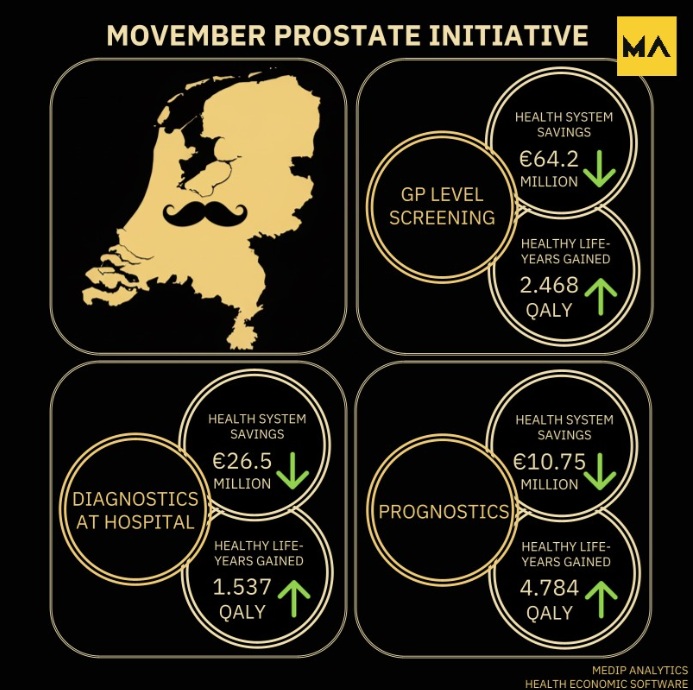
Every Movember, the spotlight turns to men’s health, and this year, Medip Analytics used the moment to take a closer look at one of the most common and impactful diseases affecting men: prostate cancer. Despite ongoing advancements, significant improvements in the Dutch diagnostic pathway remain within reach.

Each year, approximately 250,000 men in the Netherlands are screened, and around 15,000 receive a prostate cancer diagnosis. While care quality continues to evolve, the system still faces avoidable challenges: unnecessary biopsies, delayed detection of significant cancers, overtreatment of low-risk disease, and rising healthcare costs.

To better understand where gains can be made, Medip Analytics conducted a comprehensive headroom analysis using its proprietary health economic software. The goal: to calculate how much improvement is possible if today’s care pathway operated under optimal conditions.

Three critical points in the pathway

The analysis focused on three key stages of the prostate cancer journey:

  • GP screening: identifying risk earlier and more accurately in primary care
  • Hospital diagnostics: improving precision in imaging and biopsy workflows
  • Prognostics: supporting clinicians to make better-informed treatment decisions

By modelling the current standard of care and comparing it to a “perfect care pathway,” Medip Analytics quantified the potential annual impact if bottlenecks were removed and best practices widely adopted.

A clear impact on outcomes, costs, and patient experience

The resulting infographic illustrates how small changes at each stage can add up to significant national impact. Improvements across the pathway show potential for:

  • Fewer unnecessary biopsies
  • More detection of clinically significant cancers
  • Less overtreatment of low-risk patients
  • Lower overall healthcare costs
  • Better long-term outcomes for men living with prostate cancer

These findings not only identify gaps but also show that better care is already within reach.

Three solutions making a difference today

To make the analysis concrete, Medip highlighted three technologies already improving parts of the pathway:

  • Proclarix by Proteomedix AG: enabling more effective and targeted screening in primary care
  • QP-Prostate by Quibim: bringing greater accuracy to hospital-based MRI analysis
  • Genomic Classifier by Prostatype Genomics AB: providing stronger prognostic guidance to tailor treatment

Together, they demonstrate how innovations can reduce unnecessary procedures, detect important cancers earlier, and support clinicians with clearer, data-driven insights.

A clear message this Movember

With this initiative, Medip Analytics underscores a powerful point: we don’t need to wait for future technologies to improve prostate cancer care, the tools to create impact already exist today. Optimizing how they are implemented can unlock substantial clinical and economic benefits across the Dutch healthcare system.

For those interested in the detailed calculations, methodology, or opportunities for collaboration, Medip encourages reaching out to Rijk Fasel or the Medip Analytics team. Find here the pdf-file.

Many people fear the moment they or someone close to them starts ‘slipping’. A name that won’t come, a forgotten appointment, small moments of confusion. For millions, these everyday lapses raise a worrying question: is this the beginning? Remind is building a platform to give people clarity much earlier than current systems, and in doing so, lighten the strain on healthcare and families.

Remind originated inside the venture studio of insurance company Nationale Nederlanden, focused on developing startups around the challenges of an ageing population. 

One in five people will develop dementia, and every diagnosis affects an entire circle of relatives. Co-founders Job van der Heijden (CTO) and Willem Schüngel (CEO) noticed a growing gap: in the years before someone enters a care facility, people with early signs of dementia often depend heavily on partners and children. “They’re the ones who deal with the day-to-day realities long before there’s a diagnosis”, says Willem.

At the same time, many people worry about their own risk. “People often ask themselves: am I next? And that fear grows when they’ve seen what dementia can do to a loved one. I started digging into this issue, and it simply wouldn’t let go of me”, Willem says.

With Jobs’ experience in medical informatics and digital hospital systems and Willems entrepreneurial skills, they decided to independently build a product that could help people earlier, at home, before symptoms escalate. Nationale Nederlanden remains co-founder and early funder.

Understanding dementia earlier, from home

Within our care system, dementia is often diagnosed fairly late. People can struggle with symptoms for years before reaching a memory clinic. And 30% of referred patients turn out not to have dementia at all — their symptoms stem from things like stress, menopause or depression, adding unnecessary pressure on hospitals.

Remind’s solution

At the same time, technological innovations focus on earlier detection. New cognitive, behavioural and speech-based tests are emerging, measuring one piece of the puzzle. Remind combines multiple validated technologies into one platform and tracks changes over time. 

The result is a multimodal user profile based on cognitive questionnaires, memory tests, fine-motor assessments, and short speech recordings, to name a few. By monitoring subtle changes in several domains, Remind aims to detect early signals of dementia or Alzheimer’s disease sooner.

The platform translates test results into personalised recommendations. By identifying individual risk areas, the system can highlight where lifestyle or behavioural changes are most impactful, and track progress over time.

The promise: clarity, prevention and control

Early detection has many benefits. For healthcare in general, it reduces pressure by improving the quality of referrals. When mild symptoms can be assessed at home, only people with clear indications need clinical testing. 

For patients, earlier insight means earlier action. “If you start lifestyle interventions early, the risk of developing dementia can be reduced significantly. Up to 45 percent, according to research. Furthermore, people want to stay in control. They want to understand what’s happening so they can decide for themselves how they want to organise the later phase of their life.”

Science, validation and partnerships

Remind uses validated components developed by Dutch academic institutions. To further strengthen the scientific basis, Remind will run a pilot with Hersenonderzoek.nl, part of the Alzheimer Centre at Amsterdam UMC. Participants already enrolled in research programmes will be onboarded onto the platform, helping Remind gather the volume and diversity of data needed for future development.

Validation is the company’s biggest milestone: first proving the accuracy of the model, then pursuing the licences required to support clinical diagnosis. That process typically takes several years. Until then, Remind focuses on early signalling rather than medical confirmation.

A model designed to scale responsibly

To build evidence, Remind will first launch through a subscription model. This excludes some groups initially, but it is the only feasible route to collect real-world data at scale. The aim is clear: within two to three years, start formal conversations with insurers about reimbursement for all patients.

Alongside the consumer launch, Remind is preparing a B2B strategy for memory clinics, pharmaceutical trials and healthcare providers. International expansion will follow, requiring retraining algorithms to capture contextual nuances.

The value of BANN

Nijmegen offers strong ties to academic partners and a concentration of organisations working on digital health. For an innovation that sits at the intersection of data science, clinical research and user-centred health tech, the regional ecosystem is a natural fit.

Remind is actively involved in the Nijmegen ecosystem and has already benefited from participating in the BANN programme. “The feedback was genuinely valuable. It helped us sharpen our story and look at it from a different angle.” The event also provided new contacts and introductions, some of which will play a role in the next phase of development.

What comes next

January’s launch marks a major turning point: the first real-world users, the first dataset and the first opportunity to prove the model’s value. From there, the roadmap moves through several phases: validating accuracy, expanding the user base, running the pilot with Hersenonderzoek.nl, iterating the product and then scaling towards B2B partnerships and insurance integration.

Ultimately, Remind wants to empower people long before dementia takes over their lives. If the team succeeds in delivering the evidence behind their promise, they could reshape how society approaches one of its most pressing age-related challenges.

Nights of the Nerds on Tour in Gemeente Nijmegen: mét een speciale netwerksessie voor de regionale semicon industrie en onderwijs!

Op dinsdag 25 november staat De Vasim Nijmegen volledig in het teken van technologie, talent en toekomst tijdens Night of the Nerds on Tour.

Overdag ontdekken honderden middelbare school-leerlingen de wereld van tech & creativiteit, van AI-toepassingen tot games, kunst en workshops. Jongeren ontmoeten bedrijven, makers en opleidingen uit de regio en ervaren hoe innovatie eruitziet in de praktijk en welke banen van de toekomst mogelijk zijn met de juiste technische opleiding.

Maar er is méér. Samen met Night of the Nerds organiseert Briskr een speciale netwerksessie voor het brede semicon-netwerk en onderwijs in de Lifeport Regio Arnhem Nijmegen-regio. We starten met een bezoek aan de beursvloer, bieden een verdiepend programma met 3 korte bijdragen vanuit onderwijs, Beethoven Talentplan en de semicon sector en sluiten af met een netwerkborrel.
Deze bijeenkomst vormt een brug tussen onderwijs, bedrijfsleven en technologie – een belangrijke stap richting het Lifeport Semicon Event 2026 en het versterken van ons regionale ecosysteem.

Want de vraag naar technisch talent groeit, de ontwikkelingen gaan snel en samenwerking is essentieel. Deze bijeenkomst helpt om:
– Jongeren vroeg in aanraking te brengen met semicon en hightech
– Onderwijs en bedrijfsleven dichter bij elkaar te brengen
– De Lifeport-regio zichtbaar te maken als innovatiegebied
– Toe te werken naar het Lifeport Semicon Event 2026 op 27 januari

Zo dragen we samen met Night of the Nerds bij aan een sterke en inspirerende techcommunity in de regio.

Join us on March 26, 2026, in Utrecht for the 13th edition of Innovation for Health, the leading event in Health & Life Sciences.

Innovation for Health is the leading conference in the Netherlands, bringing together key stakeholders from across the Life Sciences & Health ecosystem to accelerate innovation and improve patient outcomes.

From groundbreaking innovations to impactful collaborations, the conference offers a dynamic platform to explore the latest trends, showcase cutting-edge developments, and connect with the thriving Life Sciences & Health ecosystem – and the people driving it forward.

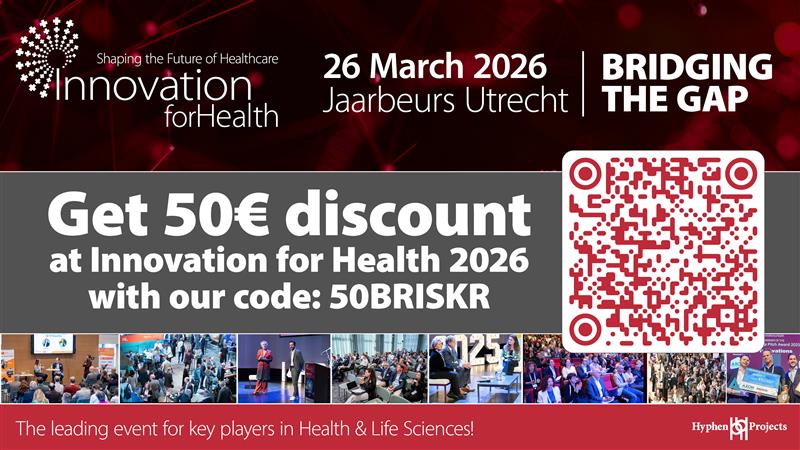
The next edition, themed Bridging the Gap, will take place on 26 March 2026 at Jaarbeurs Utrecht, alongside the Health~Holland Global Investor Forum, held on 25–26 March 2026. More info.

Why attend?

Innovation for Health 2026 is a must-attend event for anyone looking to stay ahead of the latest of the latest trends in healthcare innovation. Attendees will gain insights from industry experts who are shaping the future of Health and Life Sciences. It is also a great opportunity to meet and connect with key players across the industry, from innovators and investors to policymakers and thought leaders.

Strengthen your network and build new collaboration by interacting with attendees and exhibitors during the full day program!

Event highlights

  • Engaging program featuring the latest trends and advancements in the Life Sciences landscape
  • Interactive sessions and workshops designed to foster collaboration and knowledge exchange among attendees
  • Networking opportunities throughout the day, including access to an exclusive VIP dinner

Program

For more info see the website.

Exclusive Briskr Discount
As a supporting partner of Innovation for Health, Briskr is pleased to offer our network a €50 discount per ticket by using this code 50BRISKR. This is a great opportunity for entrepreneurs, researchers, and professionals in health and high-tech to gain valuable insights, connect with industry leaders, and explore new opportunities at a reduced rate.

Don’t miss out—register now and use the Briskr discount to join!