MetalMinds: building a smarter manufacturing model for CNC companies
What if CNC companies could get far more productive hours out of their machines, without becoming even more dependent on scarce skilled labour? That is the idea behind MetalMinds. The company is developing a scalable manufacturing model for high-mix, low-volume CNC production: production in which companies make many different parts, often in small quantities, and need to switch quickly between products.
Founder Paul Peters knows that world from the inside. After studying mechanical engineering and aerospace technology, he travelled the world for ASML, working on some of the most advanced machines in the industry. Later, he started his own CNC company in a farm shed. What began with an old milling machine grew into a business producing complex parts for satellites, aircraft, medical applications, firefighting planes and wind tunnel models.
That hands-on experience formed the basis for MetalMinds. Peters saw how powerful CNC machines can be once they are running. But he also saw how much time, knowledge and manual work is needed before that point is reached. Especially in single-piece and small-series production, setting up the process, preparing tools, clamping products, cleaning, checking and troubleshooting take a great deal of time.
“The machine itself can often do much more than companies get out of it in practice”, Peters says. “The problem is not the machine alone, but everything around it.”
From machine to complete system
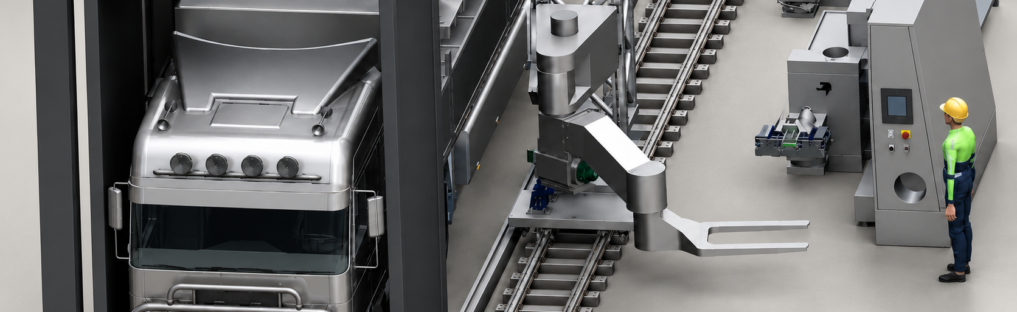
MetalMinds does not aim to deliver just another machine or a separate robot cell. The company is building a complete manufacturing model in which machines, robots, software, tools, logistics, process knowledge and data are all aligned.
Peters compares it to a professional kitchen. “You can give two people the same ingredients, but the result depends heavily on the kitchen, the equipment, the workflow and the experience behind it.” According to him, the same applies to CNC production. A machine can do a lot, but its real value only emerges when the entire production environment is set up properly.
That is why standardisation is at the heart of MetalMinds. By creating a stable and repeatable production environment, the company wants to make process data truly reusable. Peters explains: “What you learn from one product should help you start up the next, similar product faster. Over time, that can significantly reduce the amount of work needed to set up new production processes.”
In MetalMinds’ manufacturing model, data, process knowledge and standardisation play an increasingly important role. The physical environment is made as consistent as possible, so that the digital environment can learn from it. “Data only becomes truly valuable when you set up the environment in a stable and repeatable way”, Peters says.
A sector under pressure
The challenge MetalMinds is working on is not only technical. It also touches on a larger strategic issue: retaining high-quality manufacturing capacity in the Netherlands and Europe. In sectors such as high tech, medical technology, defence, aerospace and machine building, local access to reliable CNC capacity is becoming increasingly important, Peters observes. “If you can organise production closer to home, you shorten supply chains, protect knowledge and become less dependent on distant production locations.”
For Peters, that makes automation and smarter production essential. Not only to reduce costs, but also to strengthen Europe’s competitive position. If companies can once again produce complex parts locally and at a competitive price, they can respond faster, protect their knowledge more effectively and keep critical supply chains closer to home.
Building the model step by step
The long-term ambition is a fully integrated CNC production cell in which machine, robot and digital process intelligence work together as one system. But MetalMinds is deliberately building towards that goal step by step.
For partners and investors, that phased approach is particularly relevant, Peters says. MetalMinds is not building an entirely new factory from scratch in one go. Instead, it is working step by step from existing CNC technology, robotisation and established industrial partners towards a scalable production model.
“First, we are developing the Track System as the physical foundation and first sellable building block. Then smarter robot applications and process automation will follow.” After that, MetalMinds will work towards the Smart Machining Center as an integrated CNC production cell. That repeatable approach will form the basis for the broader MetalMinds model.
For CNC companies, this could lead to significantly more productive machine hours. For operators, it means a shift: less repetitive manual work and more room to supervise and further improve a smarter production process.
A strong regional network
MetalMinds is now working on the next practical steps. For example, it is collaborating with a partner company in Wijchen, where the robot solution is to be built and tested. The company is also working with partners in AI and software.
The regional network plays an important role in this. Through StartUp Nijmegen, Peters came into contact with organisations including Oost NL, Briskr and Business Angel Nijmegen. That support helped him sharpen his story, find relevant partners and take steps towards investment and further development.
For Peters, the Nijmegen region stands out because of the practical support and the speed with which connections are made. “If MetalMinds continues to grow, I would like to keep future activities in this region as much as possible.”