New Dutch heeft een open call gelanceerd: een oproep voor Nederlandse innovaties die de wereld veranderen. Innovaties die een internationaal podium verdienen, sprekende voorbeelden die de internationale perceptie van Nederland verrijken. De innovaties uit de regio Arnhem-Nijmegen mogen uiteraard niet ontbreken. De open call loopt t/m 31 oktober 2025.

Met het initiatief New Dutch slaat Lifeport Regio Arnhem Nijmegen de handen ineen met zestien Nederlandse steden en regio’s om het verhaal van Nederland in het buitenland te verrijken. Want hoewel we internationaal bekendstaan om kaas, klompen, tulpen en molens – erfgoed waar we trots op zijn – vinden zij dat dit beeld te eenzijdig is. Wat ontbreekt, is de herkenning van Nederland als een land van innovatie. 

Een landelijk initiatief
Aan New Dutch nemen deel: Amsterdam, Arnhem, Brabant, Delft, Den Haag, Ede, Flevoland, Friesland, Groningen, Leiden, Limburg, Maastricht, Nijmegen, Rotterdam, Utrecht, Zeeland en Zuid-Holland. De Rijksdienst voor Ondernemend Nederland (RVO) en het Nederlands Bureau voor Toerisme en Congressen (NBTC) coördineren.

Urgentie: Draghi-rapport
De timing is geen toeval. De wereld staat op een kantelpunt en Europa moet zich opnieuw positioneren in een veranderende wereldorde. In het recente rapport van Mario Draghi (‘De toekomst van het Europese concurrentievermogen – Een strategie voor het concurrentievermogen van Europa’, 9 september 2024) klinkt een duidelijke oproep aan landen om innovatiever en ambitieuzer te zijn. Voor Nederland betekent dit: onze innovatiekracht inzetten, vooruit durven kijken en het beeld van ons land herdefiniëren.

Lifeport Regio Arnhem Nijmegen
In de Lifeport Regio Arnhem Nijmegen werken ondernemers, kennisinstellingen en overheden samen aan innovaties in Energy, Health en High Tech. Hier ontstaan oplossingen voor duurzame energie, toekomstbestendige zorg en gezonde voeding – met impact tot ver buiten onze landsgrenzen. Als innovatieve regio willen we laten zien dat onze regio koploper is in deze sectoren. Bij ons staat technologie in dienst van een duurzaam en vitaal leven. Dus schrijf jouw innovatie in.

Open call
De open call richt zich op vernieuwers in de thema’s earth, health, food, tech en culture & society. Of het nu gaat om duurzame mobiliteit, slimme energiesystemen, innovatieve zorgoplossingen of sociale innovatie: New Dutch zoekt projecten die laten zien hoe samenwerking in Nederland leidt tot impact voor de wereld van morgen.
De door een jury geselecteerde innovaties krijgen een internationaal podium via media en campagnes – om zo het nieuwe verhaal van Nederland uit te dragen: een land dat niet alleen mooie tradities heeft, maar ook samen bouwt aan een betere toekomst.

Schrijf je hier in voor 31 oktober met jouw innovatie.

Met zijn drieën zitten ze enthousiast en eensgezind aan tafel. We interviewen Floor van de Watering van Briskr, Rob Nelissen van Organon en Paul Bedford van AstraZeneca, alle drie lid van de stuurgroep van Pharma Delta (naast twee leden van MSD-AH in Boxmeer en CRL in Den Bosch).
Dit initiatief zorgt ervoor dat farmaceutische bedrijven uit Gelderland en Noord-Brabant van elkaars kennis en elkaars aanwezigheid profiteren en de regio gezamenlijk naar een hoger niveau tillen.

Hoe behoud je talent, stimuleer je innovatie en maak je de regio aantrekkelijk voor grote én kleine farmaceutische bedrijven? Dat zijn de vragen waar Pharma Delta, een consortium van inmiddels zo’n veertig Gelderse en Brabantse organisaties op het gebied van pharma, zich sinds anderhalf jaar op richt. Het doel: de farmaceutische sector versnellen en versterken door samenwerking in plaats van concurrentie.

“Het ontdekken, ontwikkelen en produceren van medicijnen is al jarenlang een belangrijk thema voor de gemeente Nijmegen”, legt Floor van de Watering van Briskr uit. “Pedro Hermkens, oud-lector aan de HAN, heeft een belangrijke rol gespeeld in het bij elkaar brengen van kennisinstituten, overheden en bedrijven. Dat gebeurde vanaf mei 2023 onder de werktitel Regio Farma. Nu is dat Pharma Delta.”

Nijmegen en Oss

Hermkens kwam al snel uit bij Rob Nelissen, programmadirecteur van Organon uit Oss. In die Brabantse stad, op een half uur rijden van Nijmegen, zit ook Pivot Park, een belangrijke farmaceutische hotspot. Nelissen: “Met Noviotech Campus en Pivot Park zitten er grote clusters in Nijmegen en Oss, maar Pharma Delta heeft geen harde grenzen. Er zitten ook belangrijke spelers in onder meer Boxmeer, Den Bosch, Eindhoven en Tilburg.”

Paul Bedford sloot niet veel later aan. Hij is directeur van de Nijmeegse vestiging van de Zweeds-Britse multinational AstraZeneca. “We hebben grote ambities met de vestiging in Nijmegen. Daarvoor is regionale samenwerking heel belangrijk. Pharma Delta is nu al heel waardevol voor ons gebleken.”

Voor de duidelijkheid: de bedrijven gaan niet gezamenlijk met medicijnontwikkeling aan de slag. Dat is, juridisch gezien, te complex. Nelissen: “Het zou wel kunnen dat bedrijven elkaar bij Pharma Delta ontmoeten en daarna samen medicijnen ontwikkelen. Maar in die samenwerking is Pharma Delta dan geen partij meer. Wij houden ons bezig met gezamenlijke vraagstukken die openbaar zijn.”

Human capital

Eén van de belangrijkste thema’s is human capital. Van de Watering: “Dat begint ermee dat we middelbare scholieren willen motiveren om te kiezen voor een technische studie. Daarna proberen we ze aan boord te krijgen bij onze bedrijven en vervolgens willen we ze behouden voor de regio.”

“Deze industrie heeft prachtige banen, van onderzoek tot productie, voor allerlei opleidingsniveaus”, aldus Bedford. Nelissen geeft een concreet voorbeeld: “We trekken binnenkort met ons verhaal naar het Koning Willem I College in Den Bosch. Jongeren moeten zien hoe leuk en belangrijk dit werk is.”

Daarnaast kijkt Pharma Delta naar samenwerking binnen de arbeidsmarkt. Medewerkers die de stap willen zetten van een groot naar een klein bedrijf, of omgekeerd, kunnen zo makkelijker in de regio blijven. “Als iemand uit mijn team beter past bij een ander bedrijf in de regio, blijft hij of zij toch behouden voor de regio”, zegt Nelissen. “Dat is winst voor iedereen.”

Kennis en faciliteiten

Naast talentontwikkeling draait Pharma Delta ook om het delen van kennis en faciliteiten. “We zijn deze zomer begonnen met bouwen aan een onderwijsplan met trainingen”, geeft Nelissen als voorbeeld. “Bedrijf A biedt nu intern misschien al trainingen aan die ook voor bedrijf B interessant kunnen zijn. Dat brengen we samen en willen we gratis aan elkaar aanbieden.”

Ook duurzaamheid is een belangrijk thema. “Iedere organisatie zoekt naar manieren om de uitstoot van schadelijke stoffen terug te brengen”, vertelt Bedford. “Waarom zou je het wiel opnieuw uitvinden als je buurman het probleem al heeft opgelost?”

Actiegerichtheid

De drie zijn vooral blij met de actiegerichtheid van Pharma Delta. Het blijft niet bij praten. Nelissen: “We hebben de bal heel bewust bij de bedrijven zelf gelegd.” Daardoor ontstaat samenwerking op een natuurlijke manier. “Bedrijven kennen de uitdagingen en weten elkaar steeds beter te vinden”, zegt Bedford.

De ambitie van Pharma Delta is helder: de regio aantrekkelijker maken en op de kaart zetten, nationaal én Europees. “Door samen te werken houden we talent hier, trekken we nieuwe bedrijven aan en creëren we meer innovatie”, besluit Bedford. “Alle ingrediënten zijn aanwezig om onze regio tot een toonaangevende farmaceutische hotspot te maken.”

Over Pharma Delta

Op 22 januari 2024 ontstond het samenwerkingsinitiatief dat een paar maanden later de naam Pharma Delta kreeg. Sindsdien spreken de betrokken organisaties ongeveer maandelijks online en fysiek met elkaar af, onder andere in de vorm van bedrijfsbezoeken.

De samenwerking steekt alle energie in niet-vertrouwelijke onderwerpen. “Het gaat daarbij vooral om human capital, dus het doorontwikkelen en in de regio houden van talent, en om het delen van techniek, faciliteiten en proceskennis om medicijnen te onderzoeken en produceren”, vertelt Floor van de Watering van Briskr.

Pharma Delta overstijgt de provinciegrenzen. Er zijn organisaties uit Gelderland en Brabant bij betrokken. Twee belangrijke clusters zijn de bedrijven, instituten en overheden rond de Novio Tech Campus in Nijmegen en het Pivot Park in Oss. Andere betrokken partijen zitten onder meer in Boxmeer, Den Bosch, Eindhoven en Tilburg.

De stuurgroep van Pharma Delta werkt momenteel aan het oprichten van een vereniging. Er zijn in totaal ruim veertig organisaties bij betrokken. Ongeveer 25 daarvan zijn farmaceutische bedrijven: groot en klein en actief binnen allerlei facetten van de farmacie. Pharma Delta verwelkomt graag nieuwe leden, want hoe groter de vereniging, hoe breder haar beschikbare farmaceutische kennis en expertise en hoe meer gewicht zij in de schaal kan leggen. Geïnteresseerden kunnen contact opnemen met Briskr, via info@briskr.nl.

On October 8, the fifth edition of the Radboudumc Investment Day took place at the Experience Center. Scientists, entrepreneurs, and investors from the life sciences & health sector gathered to exchange knowledge, network, and explore new collaborations.

The event was jointly organized by Briskr, Oost NL, Radboudumc, and Radboud University. With over 241 attendees, the turnout once again surpassed the previous year.

Mayor Bruls and Invest-NL

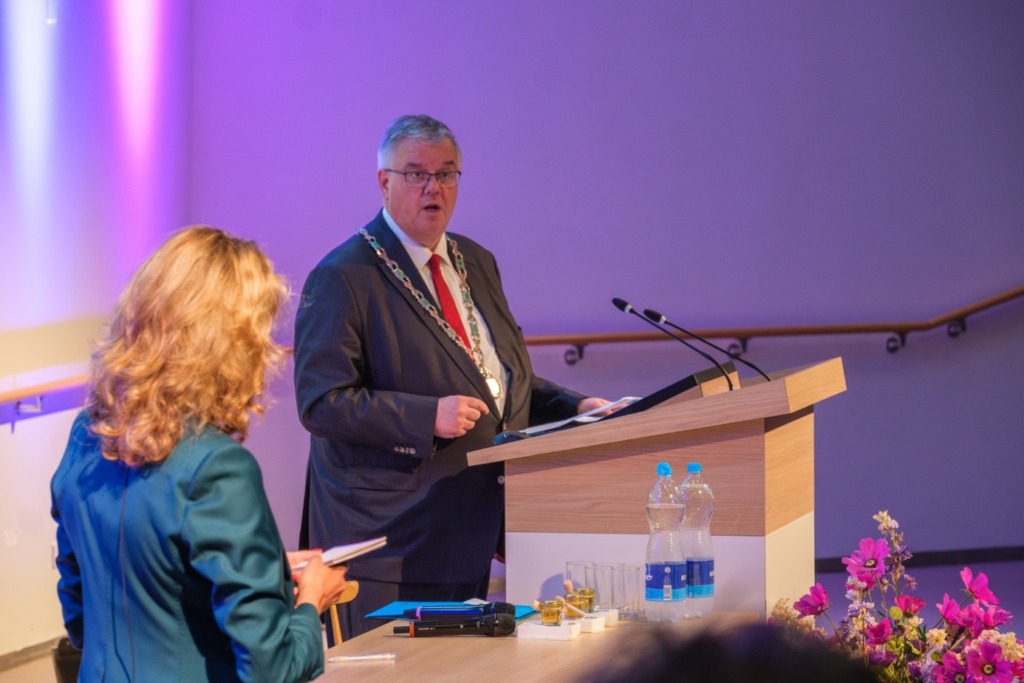
The day was opened by Mayor Bruls of Nijmegen, who attended the event in honor of its lustrum. The mayor emphasized the importance of forging new connections to successfully bring innovations to market and urged all attendees to actively pursue this goal. He also highlighted Nijmegen’s strengths as a breeding ground for innovation—a city with a rich history and a young, highly educated, and creative population.

The keynote speaker was Rinke Zonneveld, CEO of Invest-NL. In a conversation with Wieteke Numan from Oost NL, he discussed current developments in Dutch health companies. Zonneveld pointed out a growing challenge for early-stage companies: securing enough funding to make the leap from start-up to scale-up. He called on the attending investors to join Invest-NL in putting more energy—and courage—into taking risks.

As in previous years, the day’s program focused on fostering new connections. In addition to informative sessions, there was ample opportunity for one-on-one meetings, which could be scheduled in advance or during the event via a matching tool. Others met spontaneously during breaks, networking drinks, and the dinner afterward.

Radboudumc Team Wins Venture Challenge Drug Repurposing

This year, Investment Day hosted the final round of the Venture Challenge, a national initiative that helps early-stage entrepreneurs refine their ideas. This edition focused on drug repurposing: applying existing medications to new uses.

The Radboudumc team SAVE emerged as the winner. SAVE aims to repurpose the drug Sirolimus for rare congenital vascular anomalies, where it has shown high effectiveness. The team consists of Maroeska te Loo, Veroniek Harbers, Edith Klappe, and Carine van der Vleuten. They received a €20,000 incentive prize to further develop their initiative.

Angela Soares Wins Martijn Kriens Best Poster Award

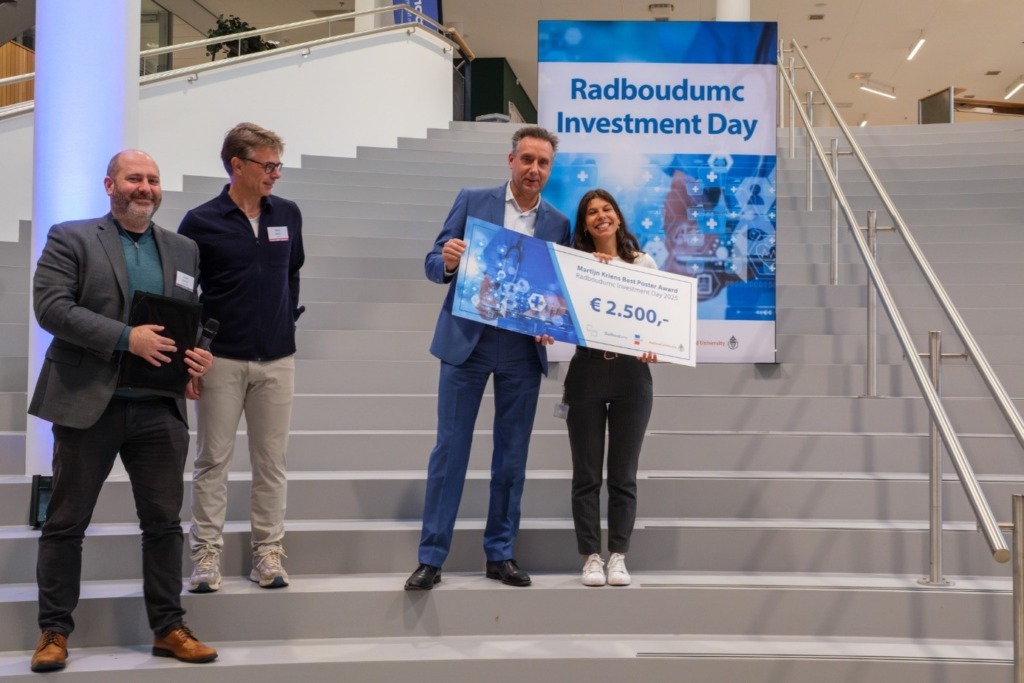
PhD candidate Angela Soares won the event’s poster competition (see photo). Her research explores the use of integrated sensing cell-signatures (ISS) to detect infected joint prostheses. This method has the potential to identify infections much faster and more patient-friendly than current diagnostic techniques.

Angela received the Martijn Kriens Best Poster Award: a €2,500 encouragement prize for her idea. Entries were judged not only on scientific merit but also on their potential to evolve into successful products.

Het Digital Health Challenge Lab (DHCL) brengt meer dan 20 zorg-, wonen- en welzijnsorganisaties samen om digitale innovaties te versnellen. Vanuit de praktijk delen onze partners hun uitdagingen – en nodigen ondernemers uit om met slimme oplossingen het verschil te maken.

Vandaag zijn nieuwe challenges gelanceerd, waaronder:
1. Zelf-actualiserende digitale netwerkkaart voor wijkprofessionals
2. Empathische AI-assistent voor zorg en welzijn
3. Digitale wegwijzer levensvragen naar sociale ondersteuning
4. Community building in de wijk
5. Onderlinge ondersteuning in vitaal wonen complexen
… en meer!

Heb jij een oplossing? Pitch je idee en maak kans op pilots, support, netwerk én opschaling. Bekijk alle challenges en doe mee: meld je hier aan.

Wat maakt DHCL uniek?
– 20+ stakeholders innoveren samen in regio Arnhem-Nijmegen
– Uitdagingen komen direct uit de wijk
– Innovaties worden getest met eindgebruikers
– Domeinoverstijgende samenwerking vergroot kans op succesvolle implementatie

Er zijn online vragenuurtjes tussen 20 en 31 oktober
De deadline voor het indienen is: 11 december, 17:00 uur


Digital Health Challenge Lab Partners: The Economic Board Regio Arnhem Nijmegen, Groene Metropoolregio Arnhem-Nijmegen (GMR) – regio Arnhem-Nijmegen, Provincie Gelderland, Briskr, Oost NL, Gemeente Nijmegen, Gemeente Arnhem, Radboudumc, Canisius Wilhelmina Ziekenhuis, Rijnstate, HAN University of Applied Sciences, Health Valley Netherlands, Talis, ZZG zorggroep, hashtag#Gezondheidsplein Nijmegen Noord, Leefstijlcentrum Wijchen Gezond, Volkshuisvesting Arnhem, DrieGasthuizenGroep, RIBW Arnhem & Veluwe Vallei en Starthubs.

Pelvic organ prolapse affects millions of women worldwide, yet it remains underdiagnosed, undertreated and, all too often, undiscussed. Existing treatments such as surgery or outdated pessaries fail to meet women’s real-life needs. Saturn Pelvic Health is ready to turn the tide. With Flexsupp, the company introduces a game-changing, self-managed solution that offers personalised comfort, freedom, and dignity.

The story of Saturn Pelvic Health begins with Dr Kim Notten and Dr Mirjam Weemhoff, both seasoned urogynecologists, who had spent years treating women with prolapse complaints. Despite their dedication, the available tools simply weren’t good enough.

Traditional treatment options for pelvic organ prolapse are far from ideal. Surgery, while effective for some, carries significant risks and a high recurrence rate; up to 30% in some cases. Meanwhile, conventional pessaries are based on outdated designs, often uncomfortable, difficult to fit, and nearly impossible to manage without clinical assistance. Many women stop using them within a year due to pain, inconvenience, or loss of autonomy.

Over coffee, Kim pitched the idea of doing something radically different to Bart van Diepenbeek, an experienced CEO with a background in corporates and scale-ups. Bart was instantly convinced. “Kim explained the problem, and I immediately thought: this could really help women. This isn’t some random product; this can change lives.” With biomedical engineer Lars Boogaard by their side, the four co-founders combined clinical expertise, technical ingenuity, and entrepreneurial drive.

Designed for real life

Flexsupp isn’t just an upgrade, it’s a rethink. After more than a decade of research, the team developed a pessary that adapts to each woman’s unique anatomy. It’s fully adjustable in length and width, easy to insert and remove, and designed for home use.

The device is about the size of a large tampon and includes an inflatable balloon that offers customisable support. Insertion is straightforward, and removal is as simple as deflating the device. It’s intuitive, discreet, and restores women’s control over their daily lives.

Clinically backed, personally driven

Flexsupp is generating serious interest from both clinicians and patients. Early tests have shown a 100% success rate in comfort, usability, and overall satisfaction. The team is now preparing for clinical validation and CE certification, with the backing of major hospitals including Radboudumc and Zuyderland Medical Group.

“There’s already a waiting list of women eager to try Flexsupp,” Bart says. “We talk to these patients every day. We understand what they need because we’ve listened.”

The ripple effect goes beyond individual users. Flexsupp could significantly reduce the strain on healthcare systems—fewer fittings, up to 43% fewer referrals, and potentially up to 22% fewer surgeries. GPs could manage the process with just one device in stock, reducing specialist visits and improving access to care.

They also hope to reach more women with similar issues, convincing them to improve their quality of life. Bart explains. “Now, only 3% of women with prolapse seek help. The rest stay silent, thinking it’s just part of life after childbirth. But it doesn’t have to be.”

How Briskr helped open doors

Saturn Pelvic Health crossed paths with Briskr at just the right time. Bart describes the collaboration as hands-on and refreshingly practical. “The workshops were low-threshold but packed with insights. The pitch training helped us refine our story.”

Thanks to Briskr’s network, Saturn connected with the Business Angel Network Nijmegen and entered promising conversations with multiple investors. “Briskr doesn’t just give you a stage, they help you own it”, Bart says. “Those connections made a real difference.”

A bold plan for growth

Saturn has reached this stage through smart grant funding and years of academic collaboration. Now, the company is closing its first round of investment to fund the clinical and regulatory process. Investor interest has been strong, with a wide mix of angels and VCs recognising the product’s impact and scalability.

Bart says. “We’re focused on real impact. This is something women have been waiting for.” The team plans to launch Flexsupp in Europe by 2027, with CE certification as the first step, followed by FDA approval in the US. Because pelvic organ prolapse is a global issue, the long-term potential impact of their innovation is enormous.

Want to know more about Flexsupp and Saturn Pelvic Health? Visit their website.

The countdown to TOPX Summit 2025 (13–14 November in Leiden & Utrecht) is on! With the theme “Leading Together in Life Sciences & Health: Building High-Performing Teams to Drive Innovation and Benefit Society”, this year’s edition will once again bring together current and future leaders in the life sciences & health sector.

For two days, the summit will offer inspiring keynotes, interactive workshops, panel discussions, deep dives, coaching sessions, and unique networking opportunities with peers and leaders who are shaping the future of our sector.

The brand-new visitor brochure is now available!
It includes the full program, an overview of all speakers, the “Females to Follow” feature, and the main highlights you won’t want to miss.

Download the brochure here and start planning your TOPX Summit experience.

Stay tuned for more updates, and don’t forget to subscribe to our newsletter or register today to secure your place at this flagship leadership event via this link.

Tinnitus affects more people than you might expect – and for some, it can take over their lives. Dutch health startup Tinzo is developing a digital self-help app that provides accessible, evidence-informed support for individuals living with tinnitus and hyperacusis. For founder Koen Broos it’s a deeply personal project, and he’s determined to change the way we approach this often-overlooked condition.

Like many people with tinnitus, Koen encountered confusion and long wait times when he first sought help. “My GP told me just to learn to live with it – but I was 21 and panicking”, he says. After years of struggling with sleep, focus and stress, he eventually found a mix of therapy, information, and practical tools that helped him get back on track. “I wanted to turn that personal journey into something that could help others.”

That’s where Tinzo comes in: a digital platform designed to support people from day one of their tinnitus experience.

Three pillars: education, therapy, and community

What sets Tinzo apart is its holistic, user-centred approach. The app starts with a personal intake that maps out each user’s symptoms, challenges, and goals. Based on this profile, the app recommends exercises and neuropsychological educational content that match their specific needs.

These exercises, grounded in proven methods such as mindfulness, exposure therapy, and cognitive strategies, are curated by Rizwaan Jaggoe, a tinnitus therapist with decades of experience. A built-in community function enables users to connect, share tips and find reassurance in a shared experience. “There are already thousands of people in tinnitus-related Facebook groups”, says Broos. “So, we know the need exists.”

In contrast with to many other apps, Tinzo combines structure, expert input, and empathy. Internationally, some apps offer therapy or education, but rarely both. And there is hardly any app with a strong community aspect. Tinzo aims to offer everything in one place.

A small but complete team

Although Tinzo officially launched in April 2025, the team behind it is already well-rounded. A developer, digital designer & animator, business strategist, clinical neuropsychologist, and a practising tinnitus therapist have joined Koen in his mission. “We cover all angles – technical, commercial and clinical”, explains Broos. What began as a personal initiative quickly attracted others who believed in its potential.

The current focus is on finalising and testing the first version of the app, the MVP, with a targeted user group. The first large-scale test is set for mid-July. Based on user feedback and data, the team will refine the platform ahead of a full launch later this year.

Support from the startup ecosystem

As a young startup – “we were only ten weeks old when we pitched” – Tinzo joined the Business Angel Network Nijmegen (BANN) to seek early-stage funding. The process proved to be a valuable learning experience. “We realised we were still pre-seed: no product, no data, just a prototype and a clear vision. But thanks to the feedback, we now understand what investors need to see.”

Having clinical expert Olav Wagenaar by his side during the pitch made a considerable impact. Together, they were able to articulate both the medical rationale and the business case for the initiative. “We received a lot of praise for our duo approach – science and story, presented together.”

Oost NL also supported Tinzo in sharpening the business plan, validating the market, and substantiating the funding request – crucial steps in moving from vision to viable proposition.

Briskr also played a key role in supporting Tinzo’s development. The team appreciated the trust placed in a digital health concept that focuses on a relatively niche group. Through Briskr, Tinzo connected with mentors, fellow entrepreneurs, and relevant partners.

Looking ahead: more access, better care

Tinzo’s ambitions extend well beyond simply launching an app. The aim is to offer an affordable, widely accessible alternative to current options – some of which cost hundreds to thousands of euros.  By using a low-threshold subscription model, Tinzo aims to empower more people to manage their condition effectively.

In the long term, the team is preparing for B2B integration, which would enable healthcare providers to monitor patients’ progress via the app and tailor their consultations accordingly. The ultimate goal? Integration into the national healthcare system, making tinnitus support a standard part of care.

Until then, Broos and his team are working diligently towards their Q4 launch. With growing anticipation among users, they are committed to delivering a platform that offers clarity, guidance, and a sense of community. “You shouldn’t have to go through this alone – and with Tinzo, you don’t have to.”

This Gelderland-rooted startup is rethinking post-heart attack care – from the coronary unit to your living room. For interventional cardiologist Robert Jan van Geuns and pharmacist Lars Naber, co-founders of CardioWorks, the idea to radically change intensified cardiac aftercare started with a simple question.

Their question? “Why do we still treat heart attacks patients for their intensified aftercare in the coronary care units (CCU’s) of stationary hospitals, when we know, by overwhelming medical evidence, exactly what they need, and technology allows us to give that care elsewhere?”

It’s a question rooted in decades of experience. Trained as a pharmacist, Naber spent much of his early career in the pharmaceutical industry, including as international marketing manager for a gold standard  cardiac treatment of acute heart attacks. Over the years, he specialised in redesigning healthcare processes and led numerous innovation projects in transitional care. But his fascination with acute cardiology never faded. And when he reconnected with fellow innovator prof. dr. Robert Jan van Geuns at Erasmus MC, the seed for CardioWorks was planted.

A virtual hospital for post-dPCI care

CardioWorks is developing an innovative model for cardiac aftercare that moves part of the hospital, quite literally, into the patient’s home. “We call it Connected Care”, says Naber. “Our platform replicates what a Coronary Care Unit does, but without the building. The patient is still under our medical supervision (we are officially registered as a hospital) but they will recover in their own environment.”

Personal, scalable and safe care

CardioWorks’ approach combines that medical insight with cutting-edge remote monitoring and a robust care protocol. After dPCI, selected patients will be transferred home, where they will be continuously monitored with wearable sensors and supported by a connected team of cardiologists, nurse specialists, and a 24/7 helpdesk.

The transition home is handled with precision. A nurse specialist picks the patient up from the intervention hospital, applies the sensors, and explains what to expect. At home, a roommate, often a family member, is trained  how to use an AED in case CardioWorks registers a life-threatening arrhythmia. For the patient, the experience is more humane. For hospitals, the benefits are practical: more efficient staffing, and reduced pressure on overburdened cardiac wards.

Validating the full model

The focus is on patients recovering from a heart attack after receiving a dPCI (angioplasty). Today, most of these patients stay 72 hours in hospital to monitor for potential complications. But thanks to decades of research, doctors can now predict which patients are low-risk and what kind of follow-up they’ll need.

The CardioWorks team is currently validating the full model in collaboration with Radboudumc, where patients are gradually monitored in settings that mimic home conditions – from hospital rooms to off-site apartments. A scientific study is also underway to understand the emotional needs of patients and caregivers during this transition, and how best to support them.

Solving a structural capacity problem

The need for this model is urgent. Hospitals across the Netherlands and beyond face a bottleneck: after PCI, patients often need to be transferred to another hospital for continued monitoring – but there too, beds and staff are limited. CardioWorks offers a structural solution: by unbundling care into different functions (like triage, monitoring, intervention) and operating across institutions, the model enables one team to support multiple hospitals.

“Because we specialise, we don’t have planning gaps. Our calculations show we can treat three times as many patients with the same staff, compared to a conventional Coronary Care Unit”, Naber explains.

Ready for rollout

The goal is to go live by 2027. Radboudumc will be the first clinical partner, with other hospitals already expressing strong interest. The first target group in the Netherlands includes 5,000 predictable, low-complexity dPCI patients per year. “Once we gain routine, we can expand to more complex cases. The total number of relevant admissions in the Netherlands is close to 35,000 annually, and we aim to take pressure off the system from day one.”

The concept also has international potential. “Cardiac protocols are remarkably standardised worldwide”, says Naber. “What we’re building in Gelderland is globally relevant.”

Investing in a service that comes with a product

To bring the concept to market, CardioWorks needed investors who understood a different kind of medtech proposition: not selling devices, but delivering care. Oost NL played a crucial role at this stage, helping the team sharpen their business plan, validate the market, and substantiate the funding request.

Here, Briskr played a pivotal role as well. “They connected us with the Business Angels Network, coached us on pitching, and created the right setting where entrepreneurs and investors could truly engage.”

That support helped turn a bold idea into a viable business. CardioWorks already had a lead investor and is now in active talks with three angel investors from BANN. “Briskr helped bridge the gap. Our model is new for many investors: providing a service rather than a product. But it’s a smart business case. And Briskr gave us the tools and platform to explain why.”

On June 12, Briskr and supporting partner Avantor Science hosted an inspiring Life Science Festival at Noviotech Campus in Nijmegen. As part of a two-day national event, the Nijmegen edition brought together researchers, entrepreneurs, and professionals to explore cutting-edge innovations in the life sciences sector.

The festival kicked off with a welcome by Marion Schouten (Briskr), who highlighted Briskr’s role in accelerating innovation and business growth in Health & High Tech. Liz Fransman (Avantor) introduced the festival concept and shared how Avantor and its partners are helping to drive progress in life sciences.

The heart of the event featured interactive workshops, hands-on demos, and short pitches from suppliers eager to showcase the latest developments in their fields.

A broad range of Avantor’s Life Sciences suppliers was present, each bringing unique technologies and solutions:

  • Oxford Nanopore – Nanopore sequencing
  • Agilent – Automated electrophoresis solutions (protein and DNA)
  • QuantaBio – (q)PCR and NGS reagents
  • Molecular Devices – Plate readers and automated imaging
  • Beckman Coulter – Flow cytometry
  • Cytiva – Protein purification and filtration
  • Leica – Imaging
  • Sartorius (Polyplus) – Transfection reagents
  • Fujifilm – GMP recombinant proteins, media, and LAL/endotoxin testing products
  • Omega Bio-tek – Nucleic acid extraction reagents and instruments
  • MP Biomedicals – sample preparation
  • Syngene – DNA/protein gel documentation systems
  • Discover Echo – imaging

Participants had the opportunity to ask questions, test equipment, and engage in valuable discussions with experts and peers. The collaborative atmosphere and high-quality content made this festival a standout moment for the life sciences community in the Nijmegen region.

A heartfelt thanks to all speakers, suppliers, and attendees for their enthusiastic contributions. Together, we’re building a stronger, more connected life sciences ecosystem!

Last week, we hosted a dynamic and insightful workshop with Corina Kuiper, Managing Director of the Corporate Venturing Network and founder of Innovation Family. With over 25 years of experience in strategic management and innovation, Corina brought a wealth of knowledge to the table — and it showed!

The session, titled “Ready to team up: Building successful startup-corporate collaborations,” was packed with real-life examples, practical tools, and valuable insights into how startups and corporates can truly benefit from working together.

  • From understanding the cultural and strategic gaps between corporates and startups
  • To exploring different types of collaborations and when to use them
  • And identifying the key success factors for long-term impact

Corina guided participants through the entire journey of effective collaboration.

She received a full 5-star rating from all participants — a clear testament to the relevance of the topic and the quality of the session. We thank Corina for her inspiring contribution and all participants for their great energy and openness.

Takea look at the collage to catch a glimpse of the day!