De eerste concrete resultaten van het Digital Health Challenge Lab (DHCL) zijn binnen! DHCL is een vooruitstrevend open innovatieprogramma waarin partners uit wonen, zorg en welzijn samen met innovatieve startups, scale-ups en mkb vernieuwende oplossingen ontwikkelen voor maatschappelijke uitdagingen op het gebied van zorg en welzijn. Zo ontstaan oplossingen die direct aansluiten bij werkelijke problemen van zorgorganisaties en hun cliënten. Vijf organisaties staan nu klaar om met hun oplossingen écht impact te maken in de zorgsector. In dit artikel nemen we je mee in de samenwerkingen die het afgelopen jaar zijn ontstaan.

We4U | Open Call 100@home: van mantelzorg probleem naar sociale netwerkoplossing
Tijdens de open call stond de vraag centraal: ‘hoe kunnen we ervoor zorgen dat ouderen langer, gelukkiger en zelfstandiger thuis kunnen blijven wonen’. Via de open call, waar Vivare, Volkshuisvesting en Talis onderdeel van waren, ontstond een match met We4U. We4U had een innovatieve oplossing die de druk op mantelzorgers kan verlichten en tegelijkertijd de autonomie van hulpvragers versterkt. De oplossing werd een app die informele zorg organiseert binnen bestaande sociale netwerken. Deze innovatieve oplossing maakt het voor bewoners eenvoudig om hulp te vragen voor dagelijkse taken, terwijl familie, vrienden en buren zelf kiezen welke taken ze oppakken. Dit hybride model van formele en informele zorg leidt tot kostenbesparingen en versterkt het sociale vangnet. In 2026 start de pilot met Vivare. We4U benadrukt de waarde van het traject: “Onze deelname aan DCHL heeft ons veel opgeleverd. Het traject heeft mij inzicht gegeven in hoe het werkt bij grotere organisaties en ik heb veel interessante connecties opgedaan.

VindiQu | Open Call 100@home: eenzaamheid doorbreken met digitale beleving
Via de open call ontdekte maatschappelijke GGZ-organisatie RIBW dat VindiQu’s digitale uitjes ook hun bewoners met psychische kwetsbaarheid kunnen helpen bij isolatie en eenzaamheid en ging de samenwerking aan. VindiQu ontwikkelde interactieve digitale rondleidingen die nieuwe belevingen bieden zonder dat bewoners hun vertrouwde omgeving hoeven te verlaten. De samenwerking met RIBW Arnhem & Veluwe Vallei draait al succesvol. Bewoners gaan digitaal naar Volendam en Keulen, compleet met bijpassende decoratie en hapjes tijdens de virtuele uitjes. “Voor VindiQu was de challenge een waardevol traject waarin innovatie en samenwerking centraal stonden,” vertelt VindiQu. “Dankzij dit initiatief zetten we stappen om deze vorm van beleving breder beschikbaar te maken.”

RoboHome | Slimme huishoudelijke ondersteuning: fysieke belasting verminderen
Driegasthuizengroep zocht oplossingen om de fysieke belasting van huishoudelijke ondersteuners  te verlagen zonder persoonlijke zorg te verminderen. RoboHome, een innovatief bedrijf dat zich richt op het automatiseren van taken met geavanceerde robottechnologie, introduceerde HOBOT robots als innovatieve oplossing. Deze stofzuiger-, dweil- en ramen-was-robots automatiseren zware taken en zijn speciaal aangepast voor thuiszorgmedewerkers die met de fiets werken. “De challenge betekent een belangrijke stap richting bredere toepassing van robotica buiten de particuliere markt,” aldus RoboHome. “De pilot helpt ons ontdekken hoe technologie kan bijdragen aan werkdrukverlaging en meer tijd voor menselijke aandacht.”

Healthy Chronos | Thuismonitoring RadboudUMC: complexe data begrijpelijk maken
RadboudUMC wilde weten hoe thuismonitoring effectiever kan door gezondheidsdata begrijpelijk te maken voor iedereen. De uitdaging: hoe vertaal je complexe medische data, bijvoorbeeld van wearables, naar bruikbare inzichten voor iedereen? Healthy Chronos combineert een dagboekapp, een platform voor wearables en generatieve AI die gepersonaliseerde berichten met uitleg en tips geeft. De app is ontwikkeld met privacybescherming en in samenwerking met patiënten zelf. Omdat de app en AI al operationeel zijn, kan de pilot met RadboudUMC snel starten. “We gaan onderzoeken hoe generatieve AI optimaal kan worden ingezet om gezondheidsdata begrijpelijk te maken voor patiënten,” aldus Healthy Chronos.

2 in Beweging | Activeren cliënten RIBW: van passiviteit naar eigen regie
RIBW Arnhem & Veluwe Vallei zocht naar manieren om cliënten met psychische kwetsbaarheid te activeren zonder extra tijd van begeleiders te vragen. Het probleem: hoe doorbreek je passiviteit en stimuleer je eigen initiatief? 2 in Beweging ontwikkelde ‘Duimpje voor jezelf’: een oplossing waarbij cliënten zelf activiteiten kiezen, kleine stapjes zetten en hun vooruitgang visualiseren. Eigen regie staat centraal, met zowel intrinsieke als extrinsieke motivatie. “Passiviteit doorbreken is een van de hoofddoelstellingen. Door zelf de activiteiten te kiezen en duimpjes te plakken breng je letterlijk je eigen vooruitgang in beeld,” legt 2 in Beweging uit. “Het is geweldig om te zien wat cliënten activeert om meer initiatieven te nemen en gezonde routines op te pakken.”

Van zorguitdaging naar concrete impact
De eerste samenwerkingen van het Digital Health Challenge Lab bewijzen de kracht van challenge-based innoveren in de zorg. Door concrete uitdagingen uit de praktijk centraal te stellen, ontstaan oplossingen die direct aansluiten bij werkelijke problemen van professionals in zorg en welzijn en hun cliënten. 

Deze vijf organisaties maken nu de concrete stap van concept naar pilot, waar echte impact wordt gemeten. Het Digital Health Challenge Lab heeft niet alleen innovaties mogelijk gemaakt, maar ook duurzame samenwerkingen tussen startups en organisaties in zorg, wonen en welzijn gecreëerd. 

Houd digitalhealthchallengelab.nl in de gaten voor nieuwe challenges en de resultaten. Dit artikel is geschreven door DHCL zelf en deze link vind je hier.

Time to work on your networking skills!

Networking is part of your job. When meeting new potential business partners, ambassadors, employers or clients, it’s essential that you can tell a compelling story tailored to your audience. This requires a combination of listening and storytelling skills. In this workshop, we’ll work on both.

This short session is especially designed for HAN Molecular Science students and the SMB Networking Meeting afterwards as a warm-up to the SMB Network meeting later that day, providing the perfect opportunity to immediately practice your newly learned networking skills. Of course, other interested participants are more than welcome to join!

We start by fine-tuning and adapting your story for any audience. Then, we practice how to tell this story effectively in a networking setting. This includes identifying the right people, starting conversations, and, just as importantly, knowing when and how to exit a conversation when it’s not the right fit. You’ll also learn when and how to follow up successfully after a meeting.

This will be an interactive & fun workshop with ample opportunities to test and refine new versions of your story and tactics. One thing is guaranteed: by the end of the session, at least 10 people in your network will be able to share a version of your story. #NetworkingStartsNow

About Frank Smallegange

Frank is a pitch coach for (technical) start-ups. Trained as a chemical engineer, he has extensive work experience as a designer and builder in IT. He is also a master of improvisation and storytelling, having taken courses from Las Vegas to Berlin. This unique combination of skills enables Frank to understand what makes a pitch successful and show you how to captivate your audience.


Location
Noviotech Campus, Transistorweg 5, Building M, Meet&Greet, Nijmegen.
 
Good to know
The workshop is facilitated in English and is free of charge. use the button below to register for the workshop Networking skills. And if you want to join the SMB-network meeting as well, please register via this link.

Participation in the workshop is free for everyone, including drinks and bites. However, for noshow and cancellations within 24 hours prior to the event, we will charge a fee of 15 euros (excluding VAT) to cover incurred expenses.

Ontwikkel je groeimotor: van je eerste klant naar een reeks terugkerende klanten.

Het hebben van een eerste betalende klant is een belangrijke doorbraak. Het betekent dat iemand het probleem herkent, je oplossing serieus neemt en bereid is ervoor te betalen. Dat is een sterk signaal. Maar één klant maakt nog geen schaalbare onderneming. Duurzame groei vraagt om herhaalbaar bewijs van vraag.

In deze masterclass onderzoeken we, samen met Jan-Willem van Beek (Forty), hoe je van die eerste klant komt tot een groep klanten met hetzelfde onderliggende probleem en vergelijkbaar koopgedrag. We kijken hoe je leert van echte klantinteracties, hoe je aannames vervangt door bewijs en hoe je je propositie scherper maakt op basis van wat klanten daadwerkelijk doen en niet wat ze zeggen.

De masterclass combineert korte, gerichte theorie met praktische werkvormen. Je werkt aan je eigen casus en vertaalt inzichten direct naar concrete vervolgstappen. Je kunt individueel deelnemen of met een collega.

Over Jan-Willem van Beek
Jan-Willem helpt bedrijven, startups en investeerders bij het ontwerpen, testen en laten groeien van nieuwe businessmodellen. Hij heeft ervaring bij uiteenlopende corporate bedrijven (zoals HEMA, Philips en NOC*NSF) maar haalt het meeste plezier uit het helpen van start-ups. Voor Sportinnovator heeft hij een incubator-programma voor startende sport-ondernemers ontwikkeld.

Door deze workshop krijg je:

  • Begrip waarom een klant, jouw klant is geworden
  • Inzicht in zwakke en sterke groeisignalen
  • Grip op het runnen van 2 bedrijven naast elkaar; 1 die klanten binnenhaalt en 1 die klanten behoudt
  • Een 90-dagen plan voor groei, met duidelijke acties en keuzes

Praktisch
Inloop om 13:30
Masterclass 14:00 – 16:00
Borrel: 16:00u

Deelname
Partners van Health Valley kunnen gratis deelnemen aan de masterclasses. Ben je nog geen partner, of wil je zeker weten of Wings bij jou als ondernemer past? Neem dan contact op met innovatiemanager Pim van der Hoorn via 06 29594241 of p.vanderhoorn@healthvalley.nl. Hij helpt je graag verder!

Dit evenement maakt deel uit van Wings, een reeks masterclasses. We bieden Wings aan voor zorgaanbieders én innovatieve ondernemers, waarbij we beide partijen de kans geven om elkaar onderweg te ontmoeten. De masterclasses hebben een specifieke inhoud en worden gegeven door experts en ervaringsdeskundigen. Je kunt de masterclasses als volledige serie volgen, maar ook afzonderlijk.

Meld je hier aan.

Locatie:
Radboud campus, Mercator II (MSP2 cursusruimte 00.01)
Toernooiveld 300
6525 EC Nijmegen

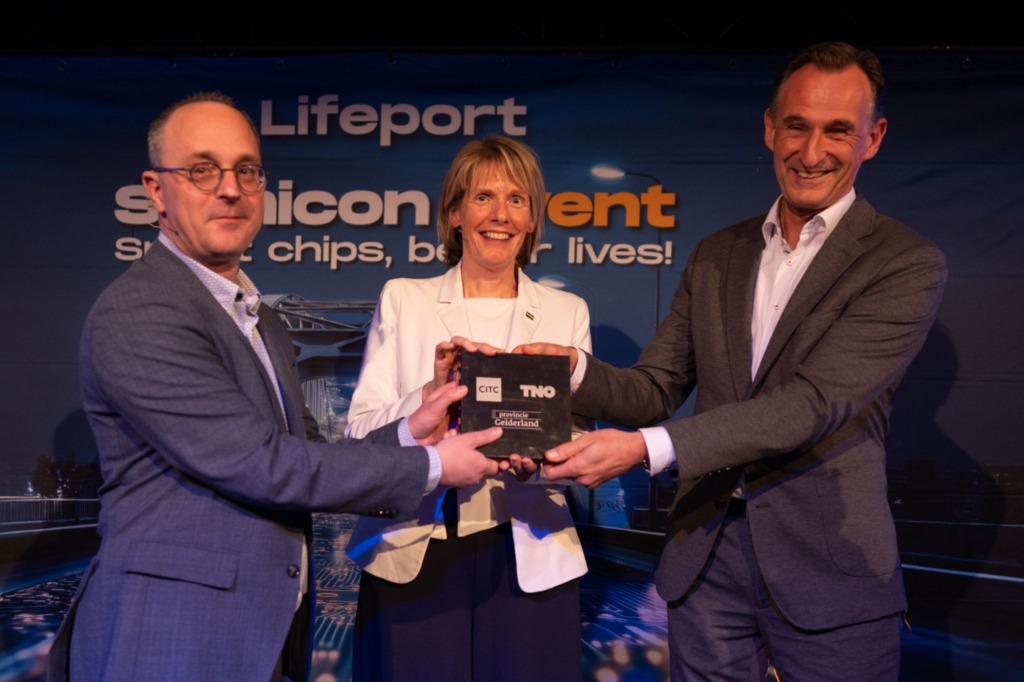
On January 27, 2026, the Lifeport Semicon Event brought together the Dutch semiconductor ecosystem at the Goffertstadion. Industry leaders, researchers, policymakers, educators and innovators met for a day defined by depth, openness and a shared sense of urgency.

More than 400 participants explored how semiconductors shape our future, not only from a technological perspective, but also through talent development, health applications and cross-sector collaboration. What stood out was the quality of the dialogue: strategic, forward-looking and rooted in real cooperation.

From cutting-edge research to future computing

One of the highlights of the programme was the keynote on neuromorphic computing by Alexander Khajetoriaans, offering a glimpse into how brain-inspired chip architectures could radically change the way we process information. His talk illustrated how fundamental research and semiconductor innovation are increasingly intertwined, and how Europe can play a leading role in this next wave of computing.

Across plenary sessions and deep-dive tracks, themes such as AI, advanced chip design, strategic resilience and Europe’s technological autonomy returned time and again, underlining the importance of long-term investment in both knowledge and people.

Innovation Square: where technology meets creativity and entrepreneurship

At the heart of the event, the Innovation Square showcased the region’s innovative strength. Entrepreneurs presented cutting-edge semiconductor applications alongside artistic interpretations of chip technology and its history. This unique combination of startups, scale-ups and art made abstract technology tangible and sparked conversations well beyond traditional sector boundaries.

The presence of students and young professionals, also actively involved in organisation, hospitality and content, further reinforced the event’s focus on learning, growth and future talent.

Semiconductors as an enabler for health and society

A recurring theme throughout the day was the crucial role semiconductors play in healthcare and life sciences. From medical devices and diagnostics to data-driven care and sustainable health systems, advanced chips are a key enabler of innovation in health. By explicitly connecting semicon technology with health applications, the programme highlighted why collaboration between these domains is essential for societal impact.

A shared ambition for the Lifeport region

The Lifeport Semicon Event made clear that the Arnhem–Nijmegen region is not only part of the semiconductor conversation, it actively shapes it. With strong research institutions, an engaged public sector and a growing innovation ecosystem, the region demonstrated its ability to connect strategy, execution and talent.

Above all, the event showed the power of bringing the right people together in the right setting. The atmosphere of trust and openness turned ambition into concrete steps forward.

With this first edition, the Lifeport Semicon Event set a strong foundation for the future. Building on this momentum, the community will continue to strengthen collaboration, invest in talent and work towards a resilient, innovative and impactful semiconductor ecosystem.

Deep Dive into Photonics: fundamentals, applications and opportunities
With Carol de Vries (PhotonDelta)

Photonics is one of the key enabling technologies shaping the future of high-tech systems. By using light instead of electrons to generate, transport and detect signals, photonics unlocks new possibilities in speed, accuracy and energy efficiency.

In this edition of Meeting Your Peers Engineers, we invite engineers and technical specialists to join a deep dive into photonics: what it is, what you can do with it, and why it matters for industries such as semicon, sensing, medical technology , automotive ,agrifood , quantum and next-generation communication.

This session is designed for engineers who want to go beyond the buzzwords and gain a clear technical understanding of photonics and its real-world impact.

Why Photonics?
Photonics is rapidly moving from niche technology to large-scale application. Through Photonic Integrated Circuits (PICs), photonic functionality can be integrated into chip-based systems, enabling new generations of compact, high-performance solutions.

The Netherlands plays a leading role in this field through PhotonDelta, which is accelerating the integrated photonics ecosystem and supporting industrialization and scaling of photonic chip technologies.

What to expect
During this deep dive, Carol de Vries will provide a technical and application-focused introduction to photonics, including:

  • What photonics is and how it differs from electronics
  • Key building blocks of photonic systems and integrated photonics
  • What Photonic Integrated Circuits (PICs) are and how they enable new applications
  • Current and emerging applications across multiple high-tech domains
  • Q&A with the audience and space for technical discussion

Who should attend?
This session is especially relevant for:

  • Engineers and technical specialists working in semicon, high-tech and engineering
  • R&D teams exploring next-generation technologies and system innovation
  • Professionals working on sensing, communication, data-intensive systems or hardware innovation
  • Anyone who wants a clear and technical understanding of photonics and its applications

About the speaker
Carol de Vries – PhotonDelta
Carol de Vries has a long track record in the high-tech industry and has been part of PhotonDelta since 2019. He previously served as CTO of PhotonDelta and has played a key role in the ecosystem’s technical strategy, including technical due diligence, strategic roadmapping and thought leadership around integrated photonics.

Within PhotonDelta, he is currently active as Chief Strategy & Startup Support (previously CTO), focusing on supporting integrated photonics startups and strengthening the ecosystem strategy.

Carol brings over 40 years of experience in the electronics industry, including management and executive roles at organizations such as Philips and NXP, working across markets like automotive, datacom and healthcare. He holds a Master’s degree in Physics from Eindhoven University of Technology.

Programme

11:30 – 11:45 Walk-in & registration
11:45 – 12:45 Deep Dive
12:45 – 12:50 Q&A and wrap-up
12:50 – 13:15 Lunch & knowledge exchange

Location
Noviotech Campus, Building M, Meet&Greet

Registration
Participation is free, but registration is required. Sign up here.

Yesterday, we hosted another successful edition of the Briskr Company Valuation Workshop, an important step in the trajectory towards pitching at the Business Angels Network Nijmegen (BANN) in March. A diverse group of entrepreneurs joined: founders who have already pitched at BANN, those preparing for an upcoming pitch, and others eager to strengthen their investment readiness. Together, they created an open, energetic atmosphere where sharing experiences and learning from each other came naturally.

Sjoerd Klabbers (BDO Tax & Legal) guided participants through the fundamentals of startup valuation. Determining a company’s worth is rarely simple, especially when emotions, early-stage uncertainty and a mix of valuation methods all come into play. Sjoerd broke down the essentials, offering practical tools to help founders understand their value drivers, prepare for investor conversations, and set the right conditions for future deals.

In the second part of the workshop, Björn Schaap (Oost NL) invited participants to step into the investor’s shoes. What do investors really look for? How do they assess a business case, and what do they expect from entrepreneurs, not just today but once they become shareholders? His session emphasized alignment and long-term partnership: it’s not about claiming the biggest slice of the pie, but about working together to make the pie grow.

As always at Briskr events, the networking moments proved just as valuable as the content. Entrepreneurs exchanged challenges, insights, and experiences, strengthening the community that helps fuel innovation in our region. A big thank you to all participants, and to Sjoerd and Björn for sharing their expertise. We look forward to seeing these founders take their next steps!

We would also like to extend a heartfelt thank-you to Sjoerd Klabbers, who has delivered this workshop with dedication and expertise three times a year since 2023. His insights have been invaluable to countless entrepreneurs preparing for their next growth step.

Defensie wil dat onderzoeksinstellingen hun dual-use kennis naar de markt brengen. Zo kan op den duur ook de krijgsmacht ervan profiteren. Er komt € 13,8 miljoen euro beschikbaar voor de oprichting van dual-use startups. Die gaan zich richten op high-tech ontwikkelingen voor zowel militaire als civiele toepassingen.

De nieuwe startups moeten betrekking hebben op een van de 5 defensiethema’s. Dat zijn: slimme materialen, ruimtevaarttechnologie, quantumtechnologie, intelligente systemen en sensoren. Binnen het programma zullen verschillende kennisinstellingen met elkaar samenwerken. Door van elkaars expertise gebruik te maken zijn ze in staat om innovatie sneller naar de markt te brengen.

Van kennis naar praktijk

De subsidie valt onder de bestaande subsidieregeling Thematische Technology Transfer (TTT). Deze regeling is bedoeld om kennis uit onderzoek sneller om te zetten in praktische oplossingen. Vanuit het programma worden innovatievouchers uitgekeerd aan startende ondernemers. Bijvoorbeeld om hun innovatie door te ontwikkelen naar een product. Daarnaast krijgen de nieuwe bedrijven vanuit het programma begeleiding en ondersteuning in het ondernemerschap. Verder wordt er in samenwerking met particuliere investeringsmaatschappijen een fonds opgericht. Daaruit kunnen de startups een eerste investering krijgen. Dat startkapitaal maakt het mogelijk om te blijven ontwikkelen en door te groeien.

Consortia van kennisinstellingen kunnen nog tot en met 15 april hun aanvraag voor een TTT programma indienen.

Meer informatie

De TTT-tender Defensie is een samenwerking tussen het ministerie van Defensie en de Rijksdienst voor Ondernemend Nederland (RVO). Meer informatie over de regeling en de voorwaarden is te vinden via RVO.

Grief does not stop at the office door. Yet many workplaces still treat loss as something to ‘get over’ quickly, quietly, and preferably out of sight. Dearly was founded to change that, by helping employers and employees make grief and loss a normal, supported part of working life.

Dearly was founded by Pieter van der Oest, driven by a conviction shaped early in his life. “I was 18 when I lost my father”, he explains. “I noticed how uncomfortable and unskilled we are when it comes to grief. We leave people who face a life changing loss very much alone, there’s no space to share loss and sadness, even though it’s a healthy response”, Pieter says. So, for Dearly, the goal is normalization of grief, so that loss can be acknowledged, supported, and carried together, including at work, where people spend a large part of their lives.

Dearly’s focus on employers is grounded in both human impact and business reality. Each year, around 300,000 employees in the Netherlands experience the loss of a loved one, and that does not include other forms of loss, such as divorce, health changes, or major life transitions. “Every loss, every absence due to grief, sets off a chain reaction. An employee who is grieving in silence doesn’t just impact themselves, but also their family, their colleagues and the wider business.”

A cultural blind spot on the work floor

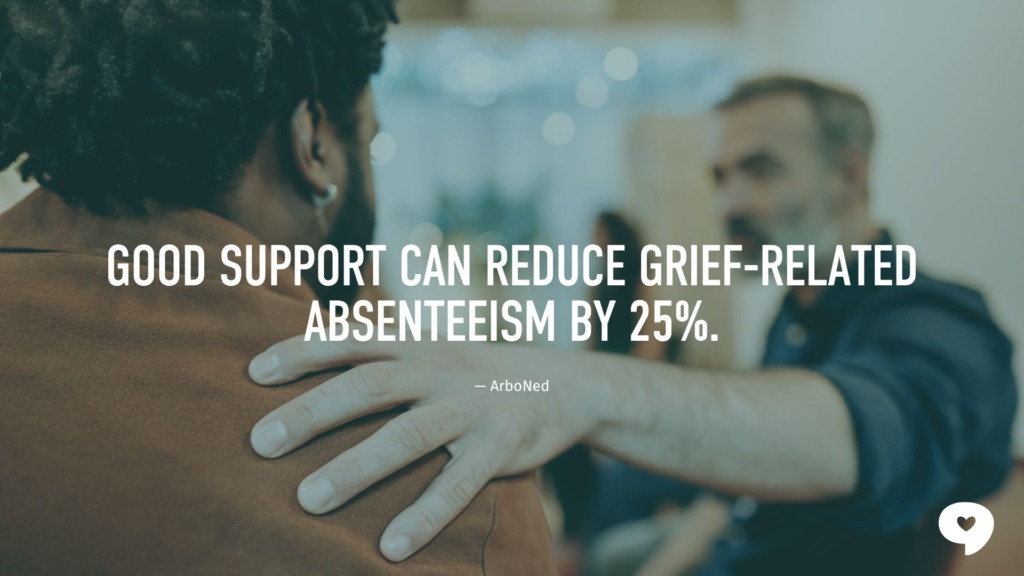
The numbers make the case for a new approach to dealing with loss and grief in the workplace even clearer. The average absence after the loss of a loved one can rise to 219 days. With an estimated cost of around 400 euro per sick day, the financial impact quickly becomes significant.

Dearly also points to a readiness gap: around 65 percent of managers feel unprepared to support an employee in grief. Due to lack of clear policy or shared language, support becomes inconsistent and employees are left to cope on their own. “When an employee comes to you after a loss, and you don’t know what to say or which support to offer, you’re already falling behind.”

This is a consequence of how we as a society deal with loss. Grief has gradually disappeared from daily life, says Pieter. Care has become medicalised, death has moved out of sight, and support is increasingly individualised. Workplace culture often expects people to move on quickly and return to ‘normal’.

A blended model: tech for access, people for connection

Dearly originally gained visibility as a grief app, designed to lower the threshold to support and make conversations about loss easier. Today, it has grown into a broader workplace offering, including grief counselling, a grief protocol, a quickscan, training, talks, an open consultation hour, and team support.

Dearly is building a hybrid model in which technology increases accessibility, while a nationwide network of carefully selected grief professionals delivers counselling and team support. Pieter is clear that grief support cannot be reduced to automation. “If we choose to automate everything, and involve as few people as possible, we miss what grief actually needs, human connection”, he says.

Building a cultural shift

A key part of Dearly’s proposition is that professional counselling is not the only answer. Pieter: “Not everyone who is grieving needs professional support. Only about one in seven people does. For everyone else, what really matters is that loss and grief are normalised in their direct environment, at work and at home. If there is no space there for their story, even the best therapeutic support won’t be enough.” Dearly therefore focuses on building knowledge and confidence within organisations, so employees and managers know how to respond when it matters.

This is also where many employer assistance programmes fall short. A coaching app alone often leads to low adoption if the culture does not feel safe, and if managers do not actively open the door. Dearly’s work therefore focuses on preparedness and consistency: policies, practical guidance for managers, and interventions that help teams support an employee over time.

Learning from the BANN experience

Dearly’s participation in the BANN programme offered a valuable opportunity to test its story in a setting where both impact and scalability are scrutinised. Feedback on the mission and the way the solution combining care, policy and technology was largely positive.

At the same time, the event highlighted how new this topic still is for many investors. Explaining grief as a workplace issue, and a viable business opportunity, often takes more time than a typical software pitch. The experience proved constructive. The team sharpened its positioning, improved its pitch, and gained clarity on how to communicate its hybrid model, strengthening the foundation for sustainable growth.

What comes next

Dearly is now preparing for its next phase. An improved platform is set to launch, and Pieter aims to build on sales and marketing capacity, because awareness is a prerequisite for change, especially with a theme that is “not a sexy topic”. At the same time, Dearly is exploring partnerships, including with occupational health services and insurers, to improve accessibility and scale its impact.

The ambition remains unchanged: to help organisations become places where loss and grief are acknowledged, and where employees are supported with care, consistency and expertise. By doing so, Dearly aims to reduce absenteeism, strengthen connection at work and contribute to healthier, more human organisations.

Do you want to know more about Dearly and get in touch? Please feel free to contact via hello@dearly.nl or via 033-2340155.

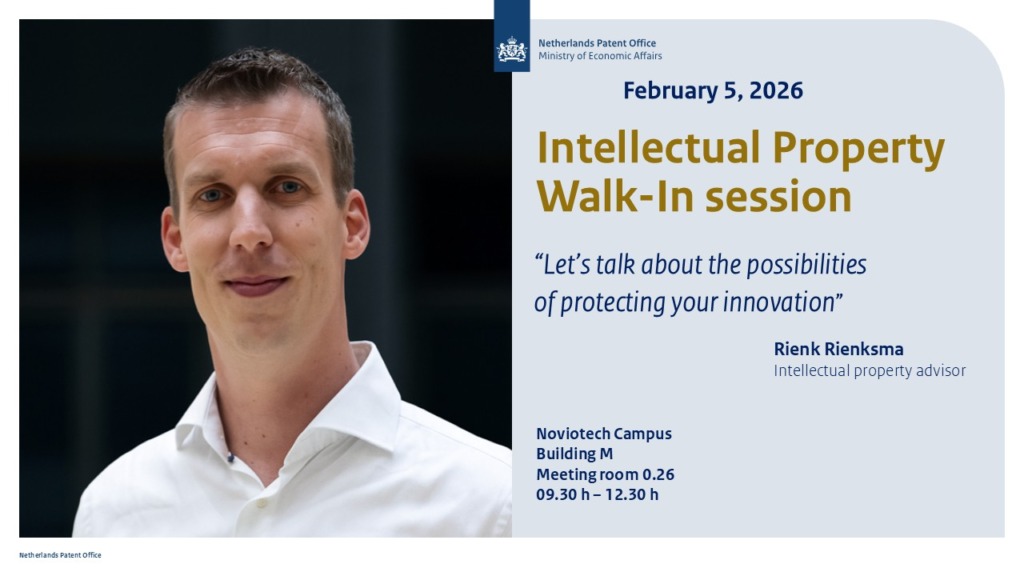
Monthly IP walk-in for health & hightech entrepreneurs. Are you a startup or SME in the health or hightech sector? Every month, we host a free walk-in session where you can get expert advice on Intellectual Property (IP).

Why IP matters

As an entrepreneur, protecting your ideas, technologies, and brand is crucial. Whether you’re developing medical innovations, software, or high-tech devices, having a solid IP strategy can help you secure funding, attract partners, and stay ahead of the competition. From patents and trademarks to design rights and trade secrets—knowing your options can make all the difference.

Meet Rienk Rienksma – IP Advisor at RVO

Rienk is an Intellectual Property advisor at the Netherlands Patent Office. The Netherlands Patent Office is the official body responsible for granting patents in the Netherlands. It supports startups and SMEs with questions about IP rights in the broadest sense—whether it’s patent protection, trademarks, or understanding how to safeguard your innovation roadmap.

The advice is confidential, free of charge, and completely independent—no commercial interests involved.

You’re welcome to just walk in, or if you prefer, you can make an appointment in advance.

Contact Rienk Rienksma: rienk.rienksma@rvo.nl

De wereldwijde vraag naar chips stijgt explosief en zal richting 2030 zelfs verdubbelen. Europa wil de afhankelijkheid van Azië en de Verenigde Staten verminderen en investeert daarom stevig in de eigen halfgeleidersector. In dit kader is in oktober 2025 het ChipNL Competence Centre gelanceerd: een one-stop-shop die Nederlandse bedrijven, onderzoekers en onderwijsinstellingen ondersteunt bij innovatie, opschaling en samenwerking in de semiconductortechnologie.

Managing Director Elly Zwartkruis ziet het centrum als een essentiële schakel in de versterking van zowel Nederland als Europa, dat daarmee naadloos aansluit bij de ambities van de European Chips Act. “Het ChipNL Competence Centre is een van de 30 competentiecentra in Europa, die een groot netwerk vormen om gezamenlijk de chipinnovatie te bevorderen. We zijn een netwerkorganisatie die ondernemers helpt versnellen op het gebied van semiconductortechnologie,” zegt ze. “Dat doen we met technische expertise, toegang tot het Chips Design Platform, de EU pilotlines, business development, talentontwikkeling en internationalisering.”

Eén loket, landelijk bereik

Hoewel de standplaats van Zwartkruis Eindhoven is, werkt het centrum nadrukkelijk landelijk. “Alle semiconregio’s in Nederland zijn aangesloten,” benadrukt Zwartkruis. “Van Delft en Twente tot Eindhoven en dus ook de Lifeport-regio. Ons centrum verlaagt de drempels voor startups en kleinere bedrijven. Het ChipNL Competence Centre biedt hun directe toegang tot toonaangevende Europese infrastructuren, zoals pilotlines en het EU Chips Design Platform. Ook kunnen zij gebruikmaken van de beschikbare faciliteiten en initiatieven in Nederland.”

Begeleiding op maat

Voor veel mkb-bedrijven is een eigen cleanroom of miljoenenlab onbereikbaar. Het ChipNL Competence Centre helpt hen om wél toegang te krijgen tot geavanceerde faciliteiten en begeleidt hen gedurende het hele innovatietraject: “We kijken heel precies welke vraag een ondernemer heeft en bij welke pilotline of expertise die het beste past,” aldus Zwartkruis. “Ondernemers worden niet alleen doorverwezen, maar echt begeleid.”

Behalve technische ondersteuning is er hulp voor de complexe materie van subsidies en fondsen. “Wij bieden zelf geen financiering, maar maken bedrijven wegwijs door het landschap van Europese, nationale en regionale subsidie- en financieringsmogelijkheden. Juist voor mkb-bedrijven is dit overzicht van financieringsinstrumenten essentieel. Deze ondersteuning is volledig kosteloos dankzij bijdragen van de Europese Commissie en het Ministerie van Economische Zaken en Klimaat.”

Talentontwikkeling

De groeiende chipvraag gaat hand in hand met een bijna explosieve vraag naar technisch talent. Nederland werkt via het landelijke Project Beethoven aan de ambitie om 38.000 nieuwe technici op te leiden.

“Er komen nieuwe minors, fieldlabs, cleanrooms en praktijkgerichte programma’s,” vertelt Zwartkruis. “Wij verbinden al die initiatieven met de concrete behoefte van bedrijven. Dat doen we voor mbo, hbo, universiteit én professionals die willen bij- of omscholen. Talentmatchmakingevents zijn een belangrijk instrument om vraag en aanbod bij elkaar te brengen, zowel voor studenten als voor mensen die een carrièreswitch overwegen.”

Medtech kansen in de regio

Juist in de Lifeport Regio Arnhem Nijmegen en in Wageningen liggen veel kansen, door de samenkomst van sterke expertisevelden: enerzijds chipdesign, packaging en productietechnologie; anderzijds een krachtig medtech-ecosysteem met universiteiten, ziekenhuizen en onderzoeksinstellingen.

“Energiezuinige, efficiënte chips worden steeds belangrijker voor medische toepassingen en geneesmiddelenontwikkeling,” legt Zwartkruis uit. “We willen partijen uit de tech- en medische domeinen actief bij elkaar brengen, juist wanneer zij elkaar nog niet vanzelf weten te vinden.”

Fotonica

Het ChipNL Competence Center ziet fotonica als een sleuteltechnologie waarin Nederland al sterk is en waar grote toekomstkansen liggen. “Fotonische chips zijn energiezuinig en efficiënt en kunnen veel betekenen voor sectoren als gezondheidszorg, sensortechnologie en communicatie,” aldus Zwartkruis. “Ons centrum stimuleert innovaties en initieert samenwerkingen op dit gebied via gerichte workshops, beurzen en pilotline-bezoeken.”

Onmisbaarheid in de keten

Het ChipNL Competence Center kijkt naar de bredere positie van Nederland binnen het Europese ecosysteem en in de internationale waardeketen. Zwartkruis ziet kansen om de rol van Nederland, dat nu vaak toeleverancier is, te versterken. “Het gaat om je onmisbaarheid in de keten,” legt ze uit. “Waar zit je kracht, in welke mate hangt de rest van de waardeketen van jouw producten of diensten af? Nederland heeft een sterke positie en werkt aan nieuwe innovaties om deze positie in de toekomst verder te verankeren.”

Het centrum helpt bedrijven bij opschaling, het vinden van nieuwe markten en het toekomstbestendig maken van hun technologie.

Maatschappelijke uitdagingen

Elly Zwartkruis: “Met mijn achtergrond in economische psychologie en in techniek pionier ik graag in innovatie. Vooral in de halfgeleiderindustrie zie ik de sleutel tot onze maatschappelijke uitdagingen. Het is een prachtige rol om samen met verschillende partijen vooraanstaande kennis toegankelijk te maken voor het Nederlandse en Europese bedrijfsleven.”

De ambitie is helder: “We hopen binnen een jaar de spil te worden in de Nederlandse halfgeleiderindustrie, waar bedrijven samenkomen om innovatie te versnellen en onze internationale positie uit te bouwen.”

Lifeport Semicon Event

In de Lifeport-regio werken bedrijven en kennisinstellingen samen aan innovaties in chiptechnologie en chip-packaging. Deze ontwikkelingen staan centraal tijdens het Lifeport Semicon Event in januari 2026.

Dit artikel is geschreven door The Economic Board Arnhem-Nijmegen voor Lifeport.